
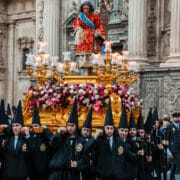
Semana Santa in Spain is one of the most striking Easter traditions you can witness.
We have lived in Spain since 2015 and have tried to catch Semana Santa events almost every year, both in small villages and in larger cities. The setting changes from place to place, but the experience stays with you.
If you are wondering what Holy Week in Spain is really like, where to see it, and whether it is worth planning your trip around, this guide will help.
What is Semana Santa in Spain?
Semana Santa means Holy Week. It is the week leading up to Easter Sunday, when Christians commemorate the Passion, death and resurrection of Christ.
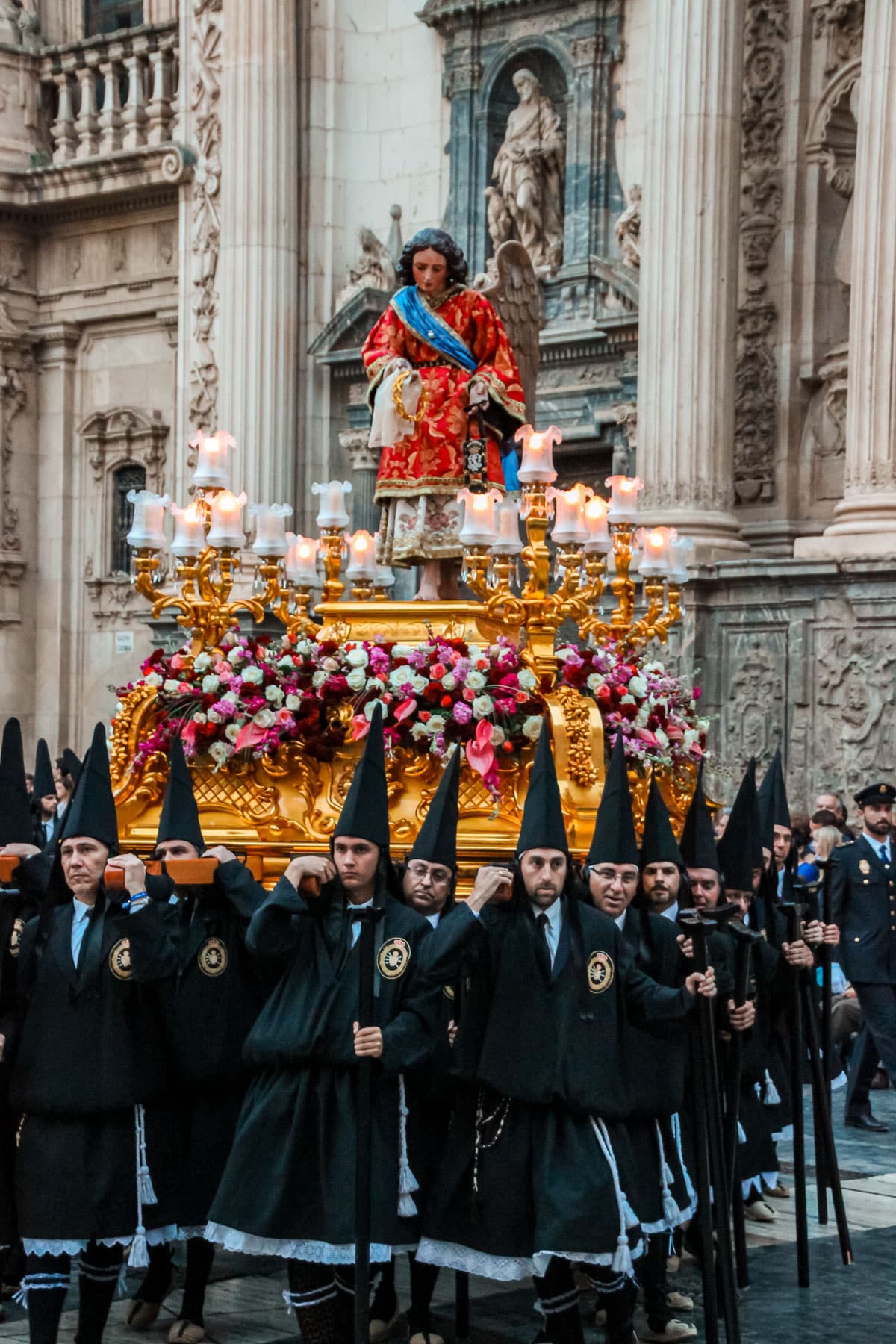
In Spain, it is marked by religious processions organized by brotherhoods. These take place across the country, from major cities to small villages and no two places feel quite the same. The route, music, pace and scale can all shift depending on where you are.
For visitors, that is part of what makes it so memorable. It is not just something you read about or spot on a calendar. It fills the streets and changes the whole rhythm of a place for a few days.
When is Holy Week in Spain?
Holy Week falls in March or April and the dates change each year.
If you are planning to see Semana Santa in Spain, always check the official local program for the town or city you will be visiting. Even when Easter dates are already fixed on your calendar, procession times and routes vary from place to place.
Where are the processions held?
In villages, towns and cities all over Spain.
The easiest thing to do is stop by a local tourist office and ask for the official program. Town hall websites often publish timetables and route maps, and in smaller places you may also find printed schedules in churches.
One thing we have learned over the years is that you do not have to be in one of the best-known places to come away impressed. Some of the celebrations we remember best happened in places that were much smaller and far less known.
What to expect at a Semana Santa procession
Tradition, religion, music and a strong sense of occasion.
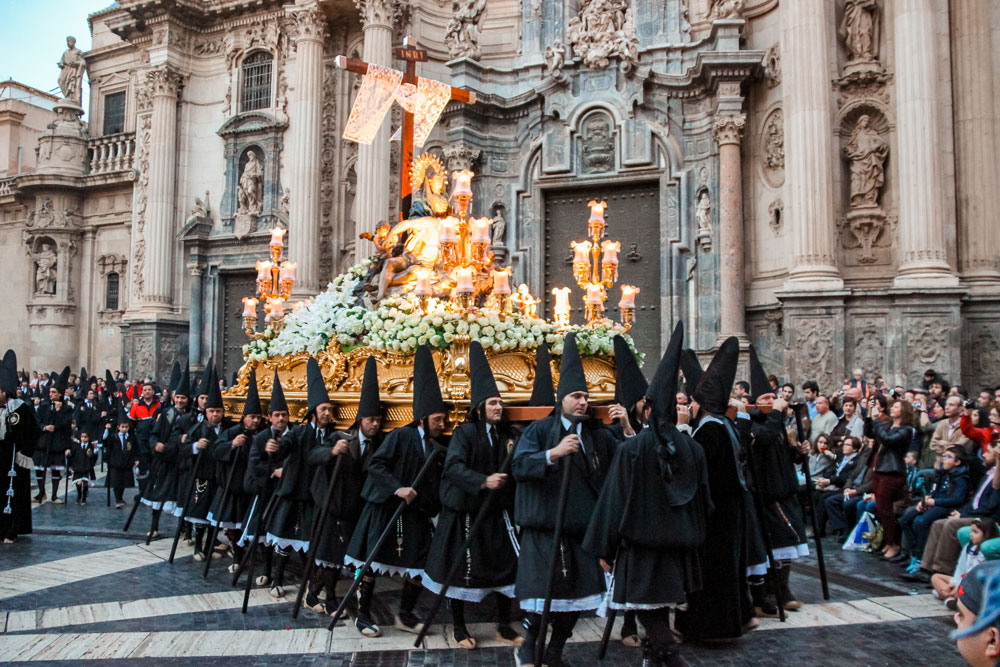
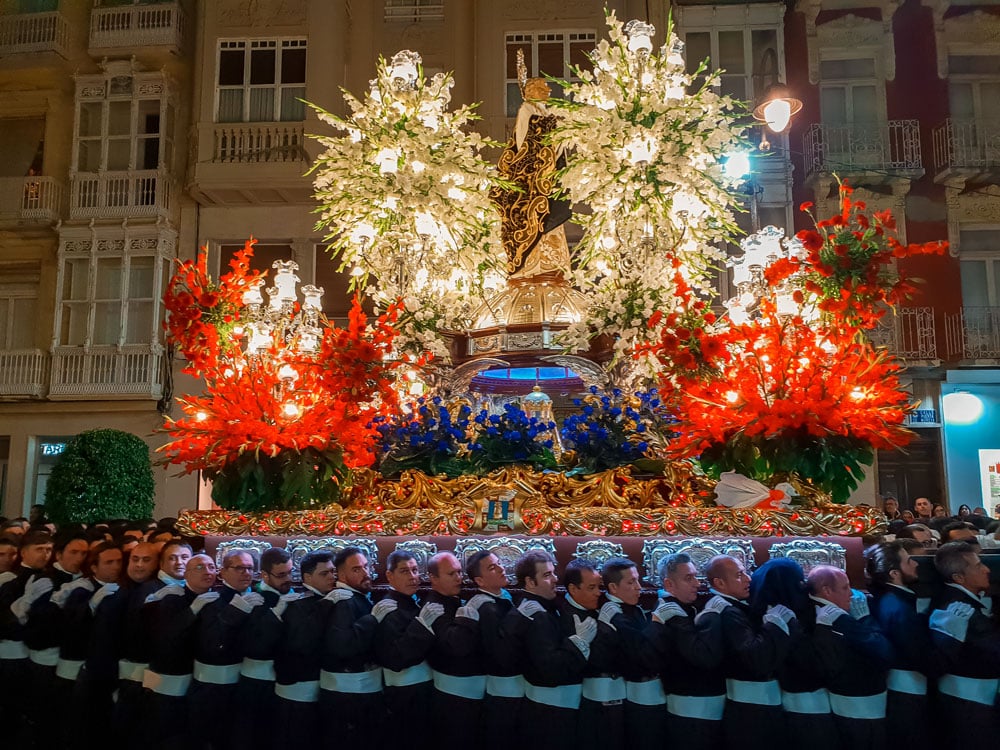
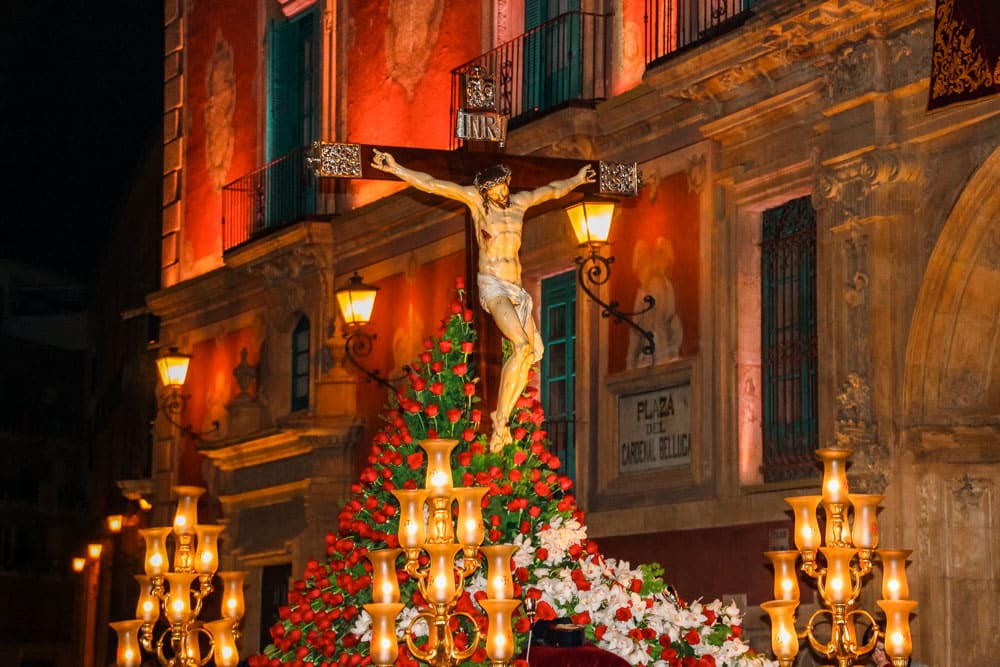
Large floats, called “pasos” or “tronos” depending on the region, carry religious statues and scenes connected with the Passion of Christ. They are carried by bearers, often known as “costaleros” and led by a “capataz”, who guides them along the route.
You will also see “nazarenos”, members of the brotherhoods who wear tunics and capirotes, the pointed hoods many travelers associate with Semana Santa. In some places, women take part wearing black with traditional “mantillas”. Clothing and customs vary, so the details are not identical everywhere.
Some processions move to the sound of drums and brass bands. Others are quieter and more restrained. In one place, the street may fall almost silent as a float passes. In another, the band changes the whole mood of the evening.
You may also notice some participants walking barefoot as an act of penance. For first-time visitors, there is a lot to take in, but it becomes easier to follow once you know the basic roles and traditions.
For many first-time visitors, this is the part that raises the most questions.
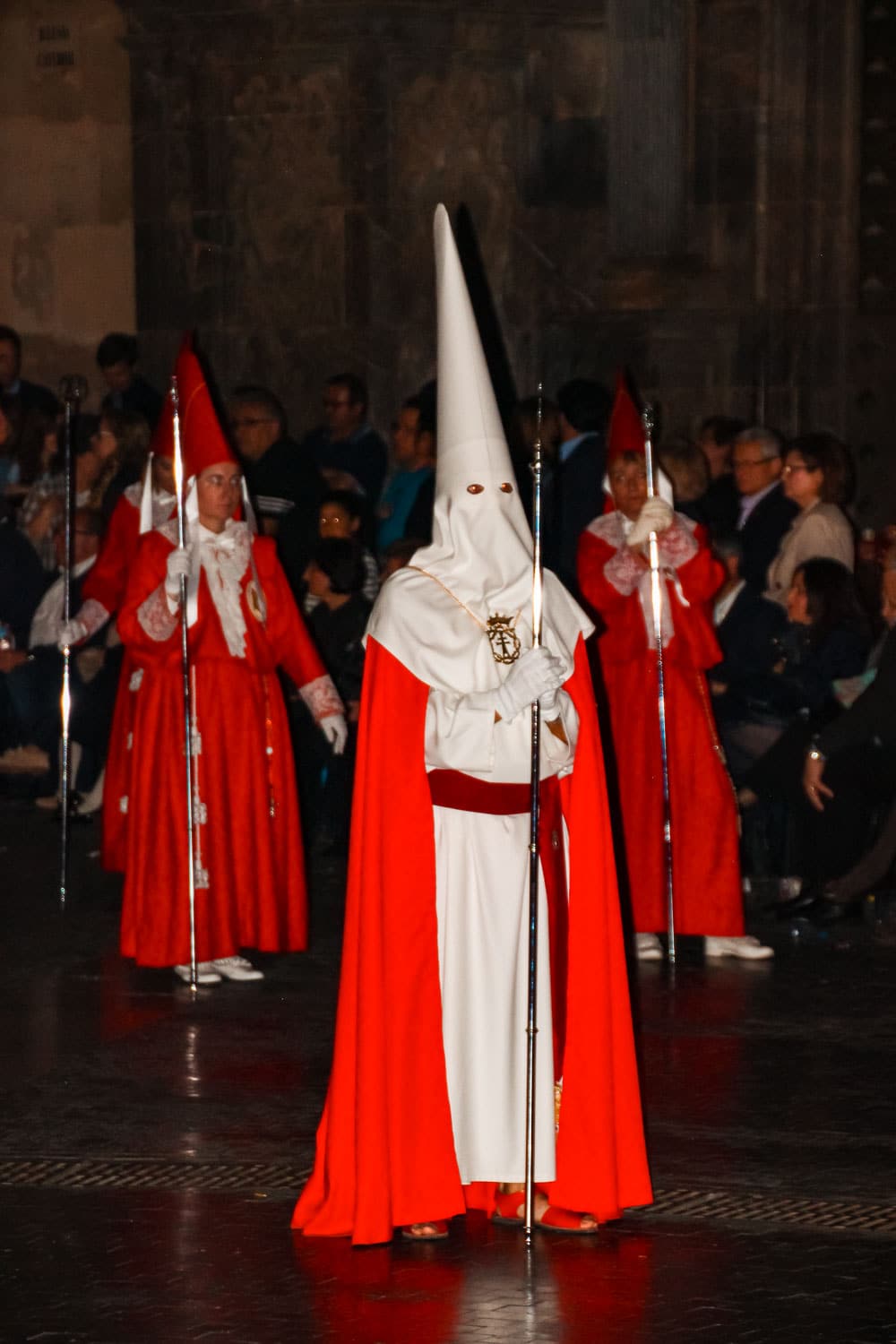
Why do people wear pointed hoods?
The pointed hoods are called “capirotes”. They are traditional garments worn by many “nazarenos” during Holy Week processions. Seen out of context, they can feel surprising. Seen in person, within the procession itself, they make far more sense as part of a long-established religious tradition.
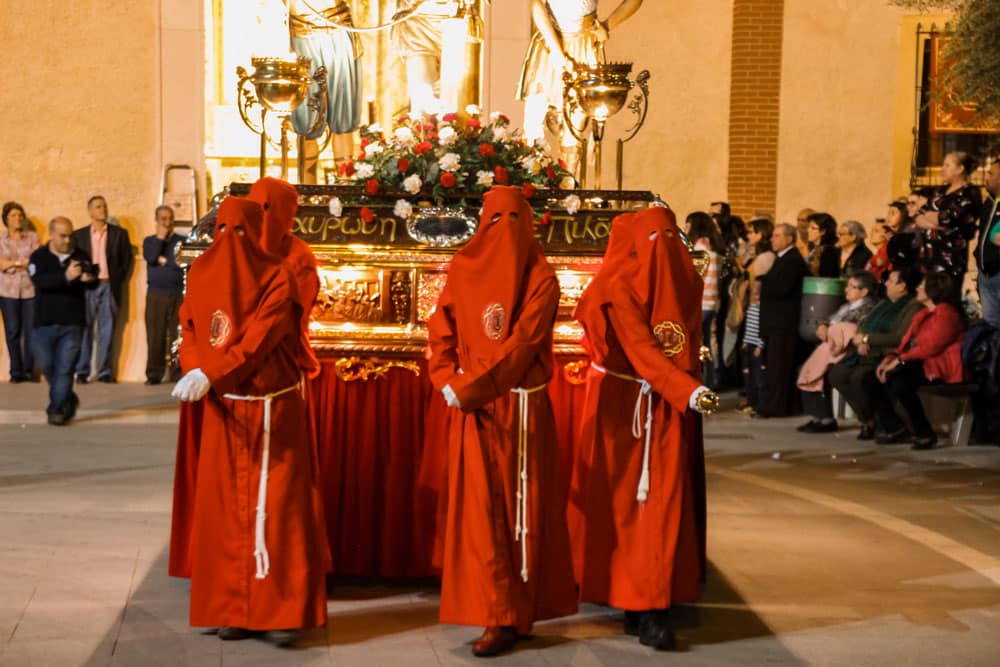
Our experience watching Holy Week in Spain
Having seen Semana Santa in both small villages and larger cities, we would not say one is automatically better than the other.
Smaller places often feel closer and easier to follow. In larger cities, the scale can be far more intense once the streets fill up and the music starts. What stays with us most, though, is usually the sound. Sometimes it is the slow beat of drums. Sometimes it is the band. Either way, it changes the whole feel of the street.
Andalusia is often described as the region with the most unforgettable Holy Week celebrations and it is true that Seville and Malaga are famous for good reason. Still, I do not think you have to be in one of the best-known destinations to come away moved by what you have seen.
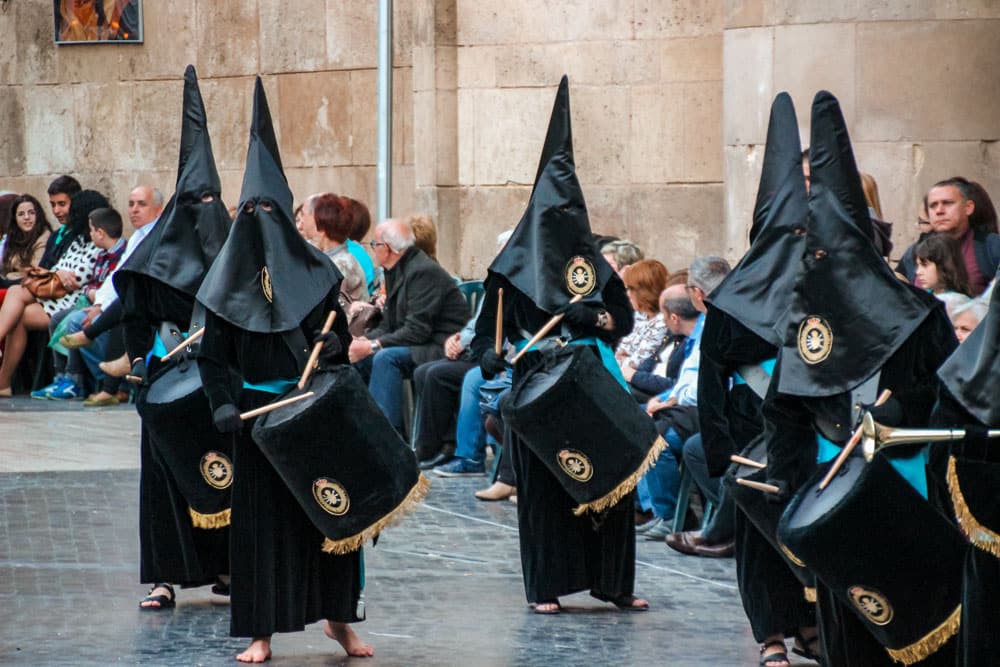
Where to see Holy Week in Spain
Andalusia is often the first region people think of, especially for Seville and Malaga, but Semana Santa is celebrated far beyond southern Spain.
Cities such as León, Zamora, Valladolid, Salamanca, Cartagena, Lorca, Murcia and Toledo are also known for their Holy Week traditions.
That said, I would not overlook smaller towns. If you are already staying somewhere in Spain during Easter, check what is happening locally before assuming you need to travel somewhere else. Sometimes the celebration right where you are turns out to be the one you remember most.
If you are building a wider itinerary, Segovia is another place worth looking into, and our guide to day trips from Madrid may help if you are basing yourself in the capital.
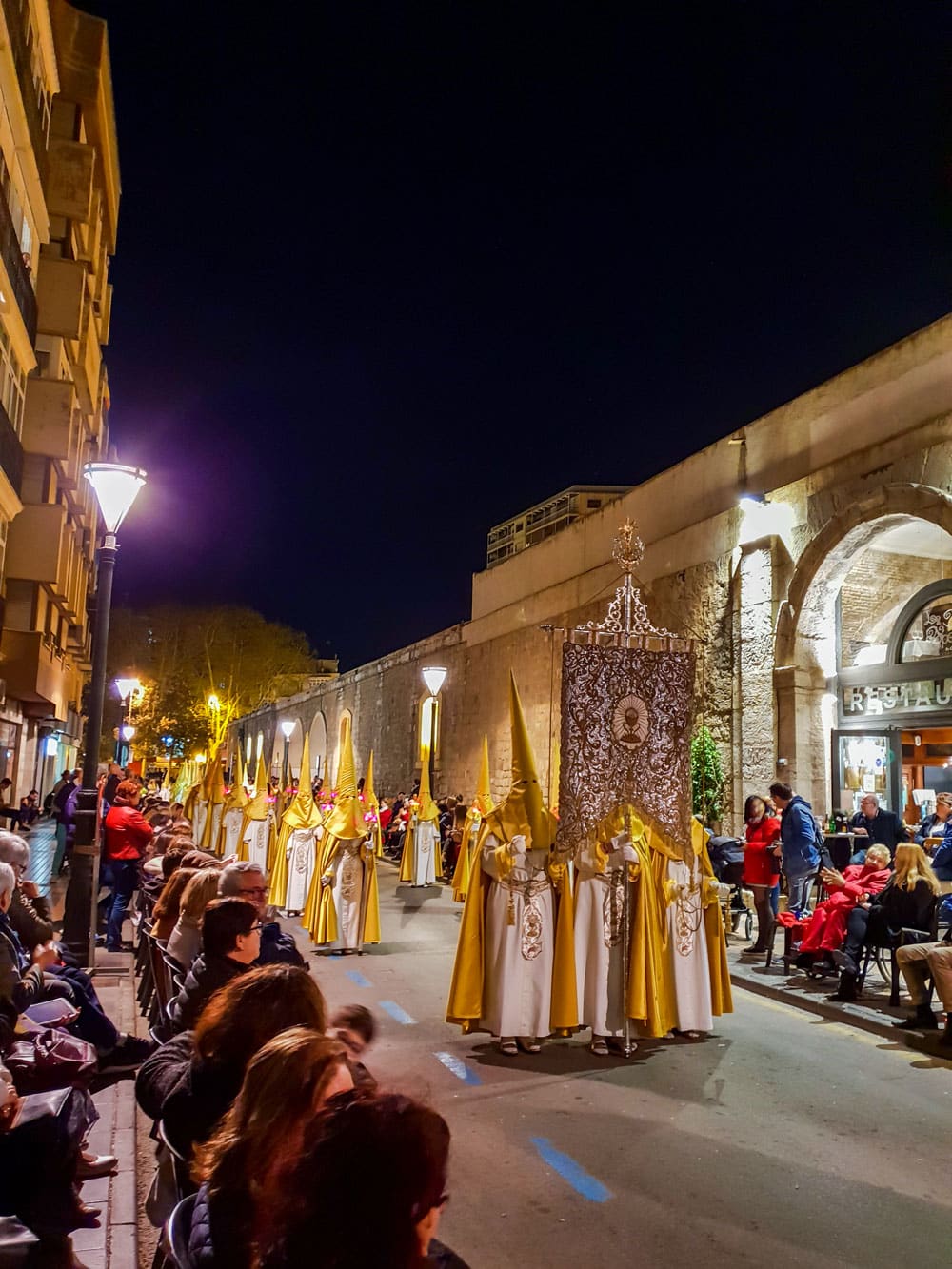
Know before you go
If you visit Spain during Semana Santa, expect larger crowds in many destinations, especially in places that are already popular with visitors.
Accommodation prices can rise and well-located stays may book out early, so it helps to plan ahead.
Some processions begin late in the evening, while others continue well into the night. In bigger cities, paid chairs may be set up along parts of the route. In smaller places, locals often bring out their own chairs and watch from outside their homes.
Spring weather in Spain can still be unpredictable, so it is worth bringing layers. Even after a warm day, evenings can feel cool when you are standing outside for a long time.
It also helps to arrive earlier than you think you need to. Streets can fill quickly, some areas may be blocked off and once the route is busy, moving around is not always easy. If there is a specific procession you want to see, check the local schedule again that same day.
For a first visit, I would not try to see too much. Pick one or two processions and give yourself time to take them in properly.
Is Holy Week in Spain worth seeing?
Yes, especially if you are interested in local traditions and want to experience a side of Spain that feels very different from the usual city break.
Even for travelers who are not religious, Semana Santa can stay with you because of the music, the artistry of the floats and the way entire communities take part.
That is one of the reasons we keep going back.
Frequently asked questions
Yes, Holy Week is celebrated across Spain, although the style, scale and schedule vary from place to place.
It takes place in March or April, and the exact dates change every year.
Comfortable shoes and layers are the safest choice. You may be standing for a long time and evenings can feel cool.
Both can be special. Larger cities often feel more dramatic, while smaller towns can be easier to follow and feel more personal.
Not always, but it is wise to book accommodation early if you are heading to a popular destination during Holy Week. In some cities, seating along parts of the route may also be paid.
Yes. Even if you are not religious, the music, tradition and sense of occasion can still make it a very memorable experience.