
Las Fallas is a celebration like no other. Mascletàs, parades in traditional dress, fireworks, huge monuments and thousands of flowers offered to the Virgin Mary make it an unforgettable experience.
The celebrations build through March and end on March 19, St. Joseph’s Day. We saw Las Fallas ourselves a few years ago and we still remember it clearly. The monuments and the flower offering were the parts we liked most. La Cremà shocked us because of the smoke, and it is not something we would choose with young kids.
Las Fallas is also one of the best-known festivals in Spain, alongside the country’s famous carnivals and Semana Santa processions.
Before you go to Las Fallas
- It is loud, crowded and much more intense than a regular city festival.
- You will do a lot of walking, so comfortable shoes really help.
- If you want to see popular events, it helps to arrive earlier than you think you need to.
- With kids, the daytime side of Las Fallas is much easier to enjoy than the late-night burning.
If you want to try a classic Spanish sweet treat while you’re in Valencia, churros are always a good idea.
What is Las Fallas in Valencia?
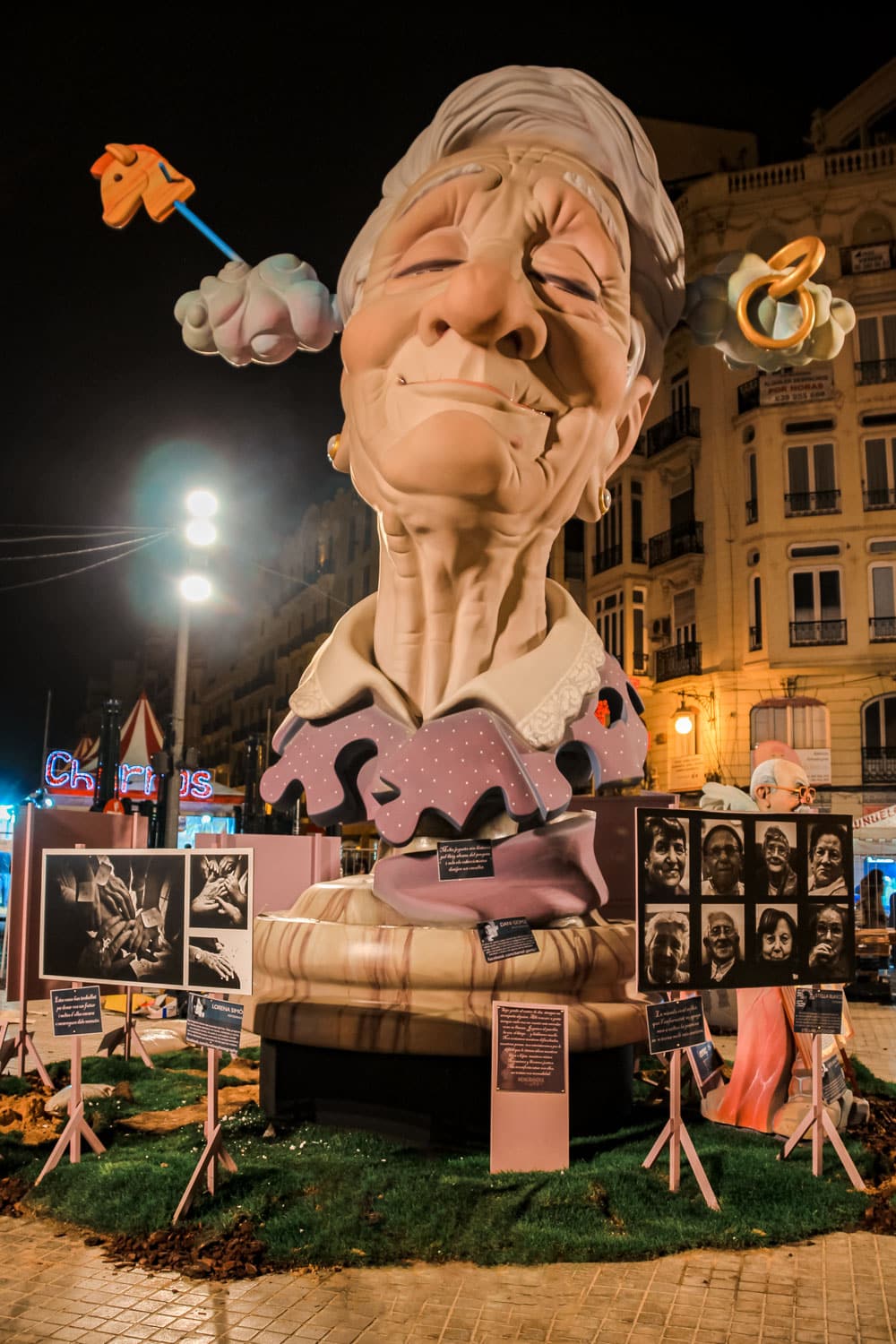
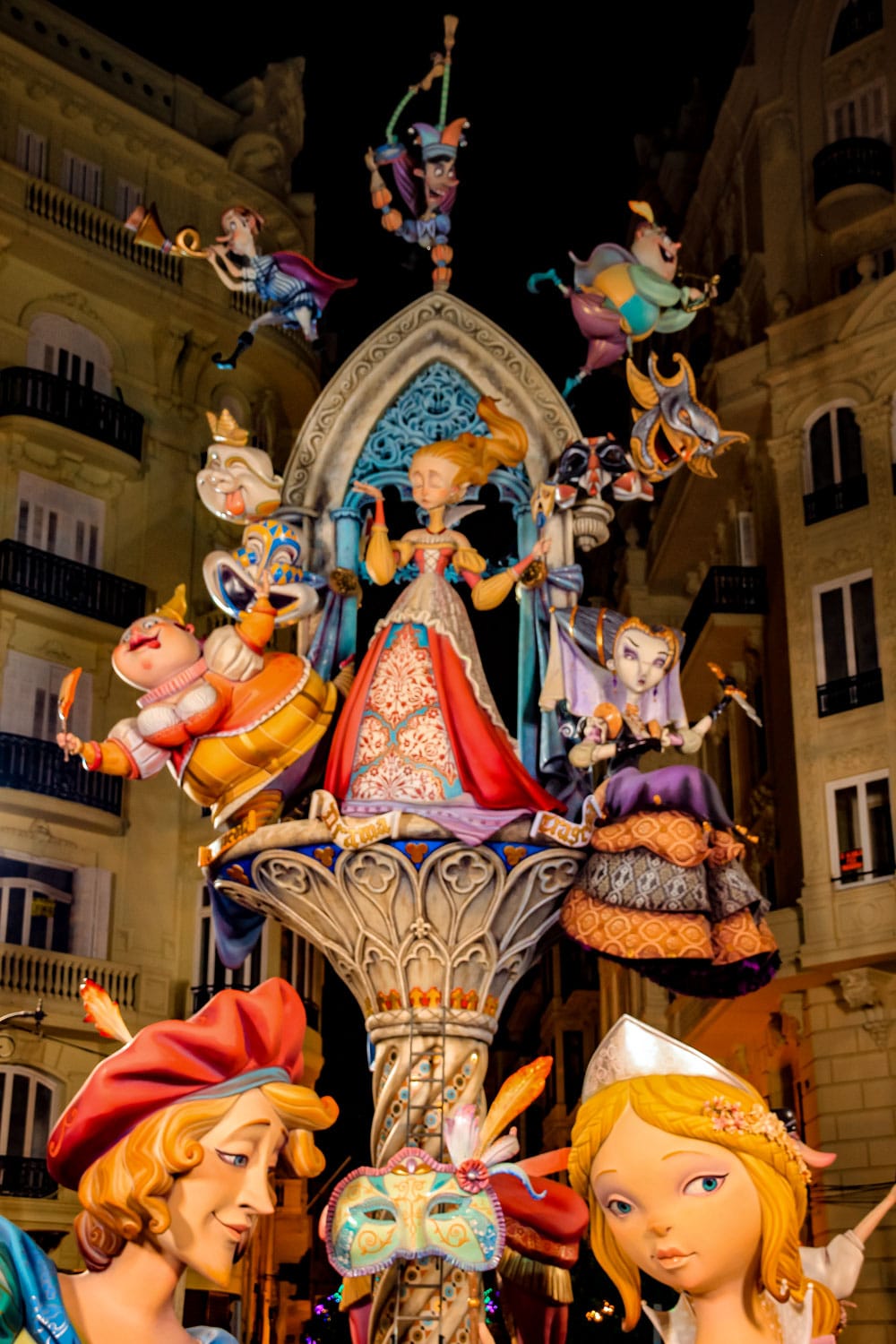
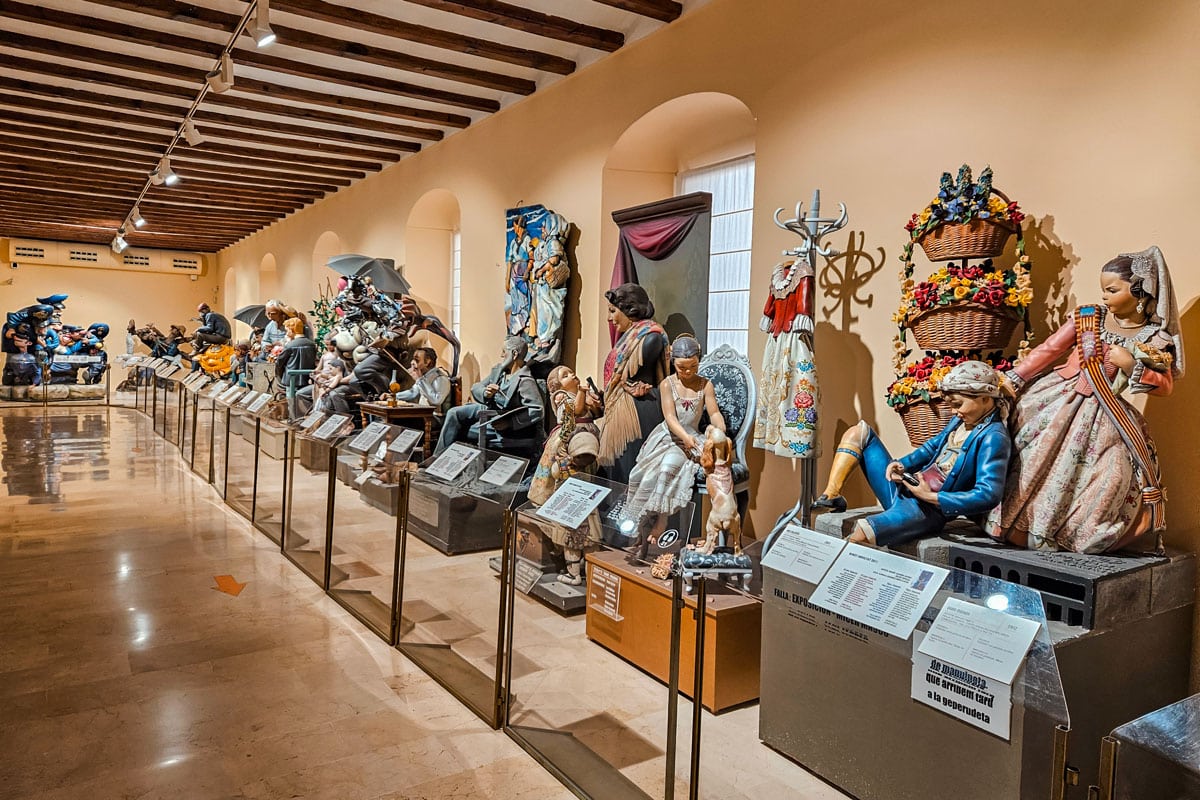
Las Fallas is Valencia’s best-known festival and ends on March 19, St. Joseph’s Day. One of the things that makes it special is how much of the city it takes over. Neighborhoods across Valencia create and display large monuments made up of figures called ninots.
These monuments, known as fallas, appear in streets and squares all over the city during the festival. Awards go to the best ones, but no matter how beautiful they are, almost all are burned at the end of the celebration.
We also visited Museo Fallero and it is well worth a stop if you want to see preserved ninots from past festivals and understand Las Fallas a little better.
The main Las Fallas events
Las Fallas is not just one event squeezed into a single day. The atmosphere builds through March, but the final stretch is when the festival is hardest to miss. If it is your first time, these are the main events to know about.
The mascletà
From the beginning of March, the daily mascletà in Plaza del Ayuntamiento becomes part of everyday life in the city. It is not a fireworks display in the usual sense. It is more about sound, force and atmosphere than watching colors in the sky.
La Plantà
This is when the fallas are fully assembled and ready in the streets. It is one of the best times to walk around and really look at the monuments.
The flower offering
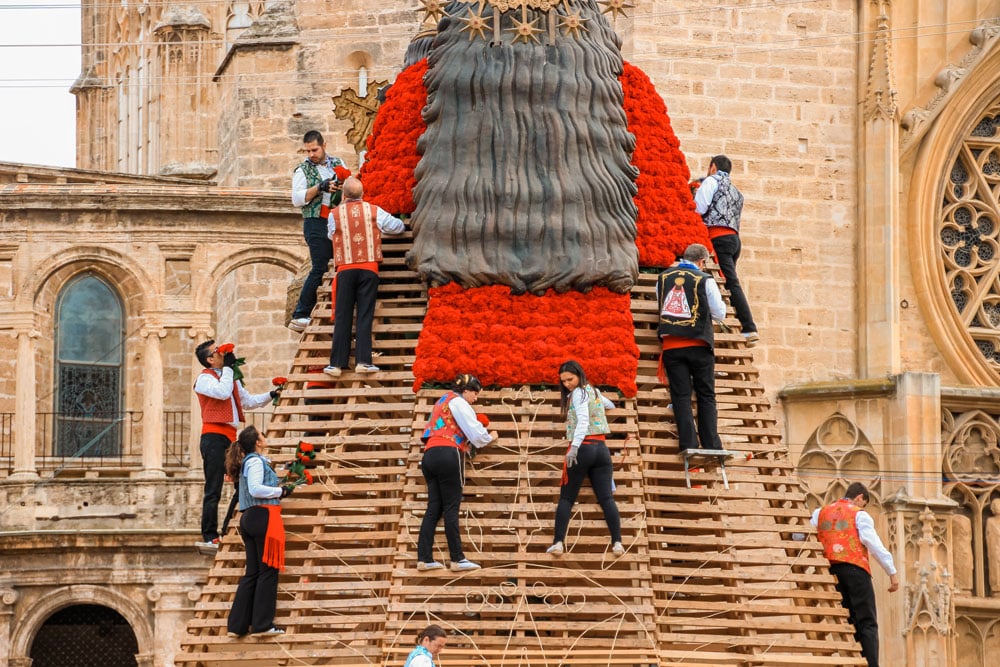
Participants in traditional dress walk to Plaza de la Virgen and offer flowers to the Virgin Mary.
Nit del Foc
This is the big fireworks night and one of the most anticipated moments of the festival.
La Cremà
Las Fallas ends with La Cremà, when the monuments are burned. It is the most dramatic part of the festival and the part many people think of first.
Before your trip, check the official Fallas program for the current year, as timings and details can change.
Is Las Fallas worth visiting? Our experience
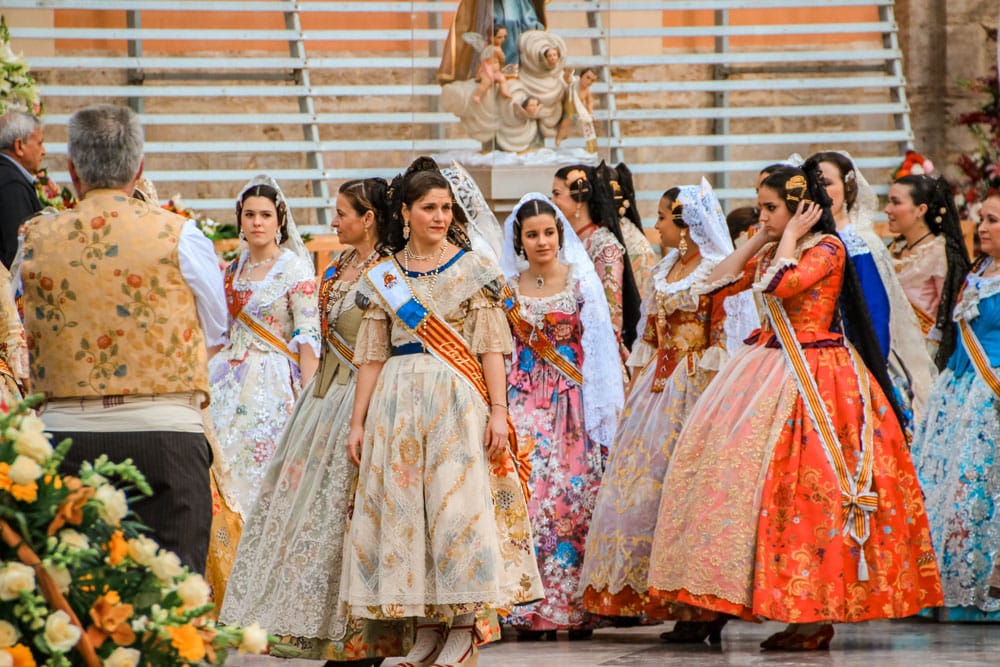
We saw Las Fallas first-hand a few years ago and we still think it is a one-of-a-kind event. The monuments, the traditional dress and the atmosphere were the parts that stayed with us most. You notice the festival all over the city.
What we liked most was walking around to see the fallas and watching the flower offering in Plaza de la Virgen. Those are the parts we would go back for.
La Cremà was the one part that shocked us. We will come back to that later, but it felt harsher in person than we expected. Even with that, we still think Las Fallas is worth seeing, especially for the monuments, the atmosphere and the traditional side of the festival.
Las Fallas with kids
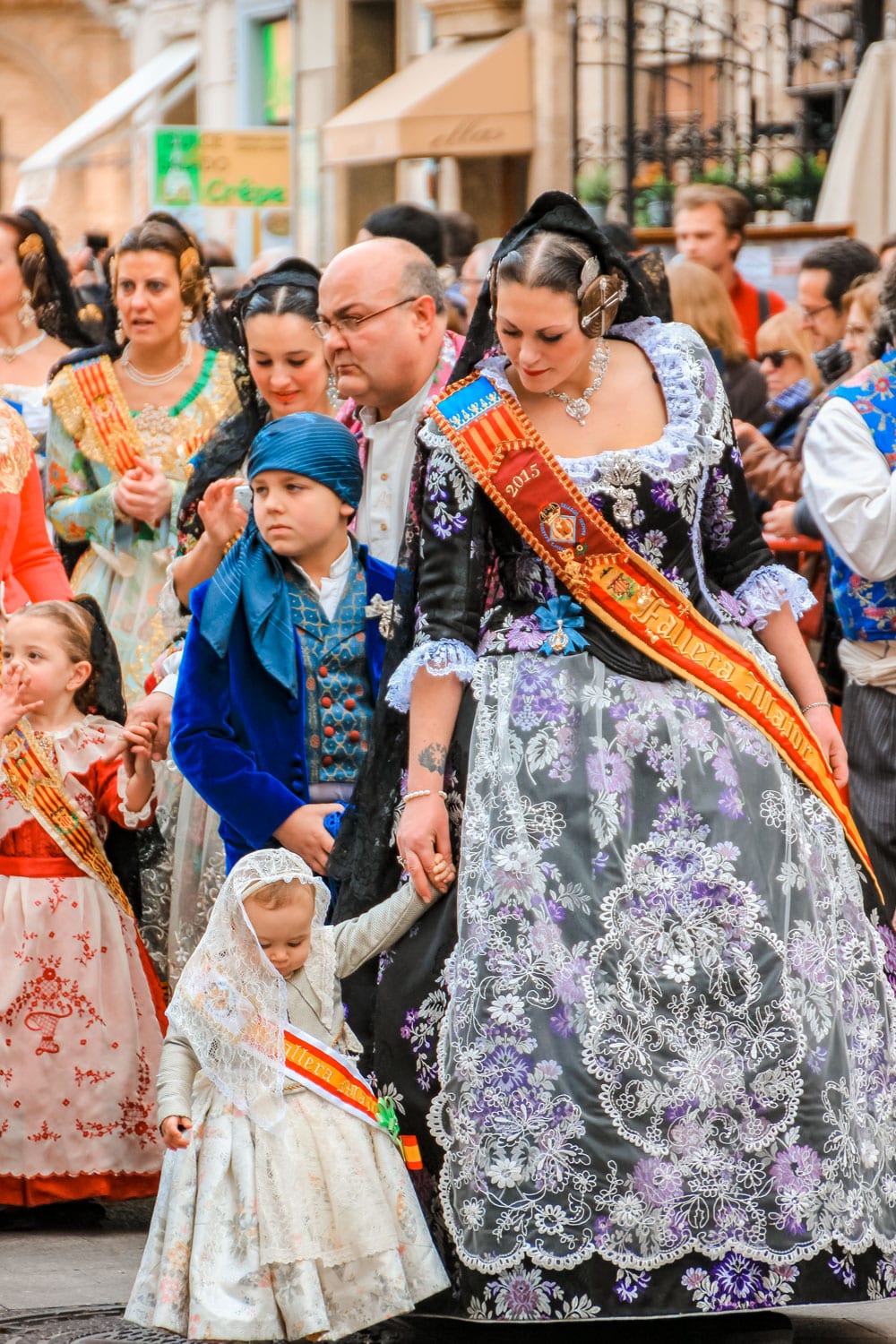
Las Fallas can be enjoyable with kids, but it depends a lot on which parts of the festival you choose. During the day, walking around to see the monuments can be fun and the traditional dress and music add a lot to the atmosphere.
The harder part is the noise and the crowds. Even away from the main events, the city can feel loud and busy during Las Fallas, so that is something to keep in mind with younger children.
For us, La Cremà is the part we would not choose with small kids. The daytime side felt much easier to enjoy as a family.
Where to stay during Las Fallas
Ciutat Vella is a good choice if you want to stay central and do a lot on foot. It puts you close to many of the main sights and events, but it also means more noise and more people around you.
Ruzafa is a good option if you want somewhere lively with plenty of places to eat and drink, while still staying close to the center.
Wherever you stay, book early. It is one of Valencia’s biggest annual events and accommodation can fill up quickly.
The flower offering to the Virgin Mary
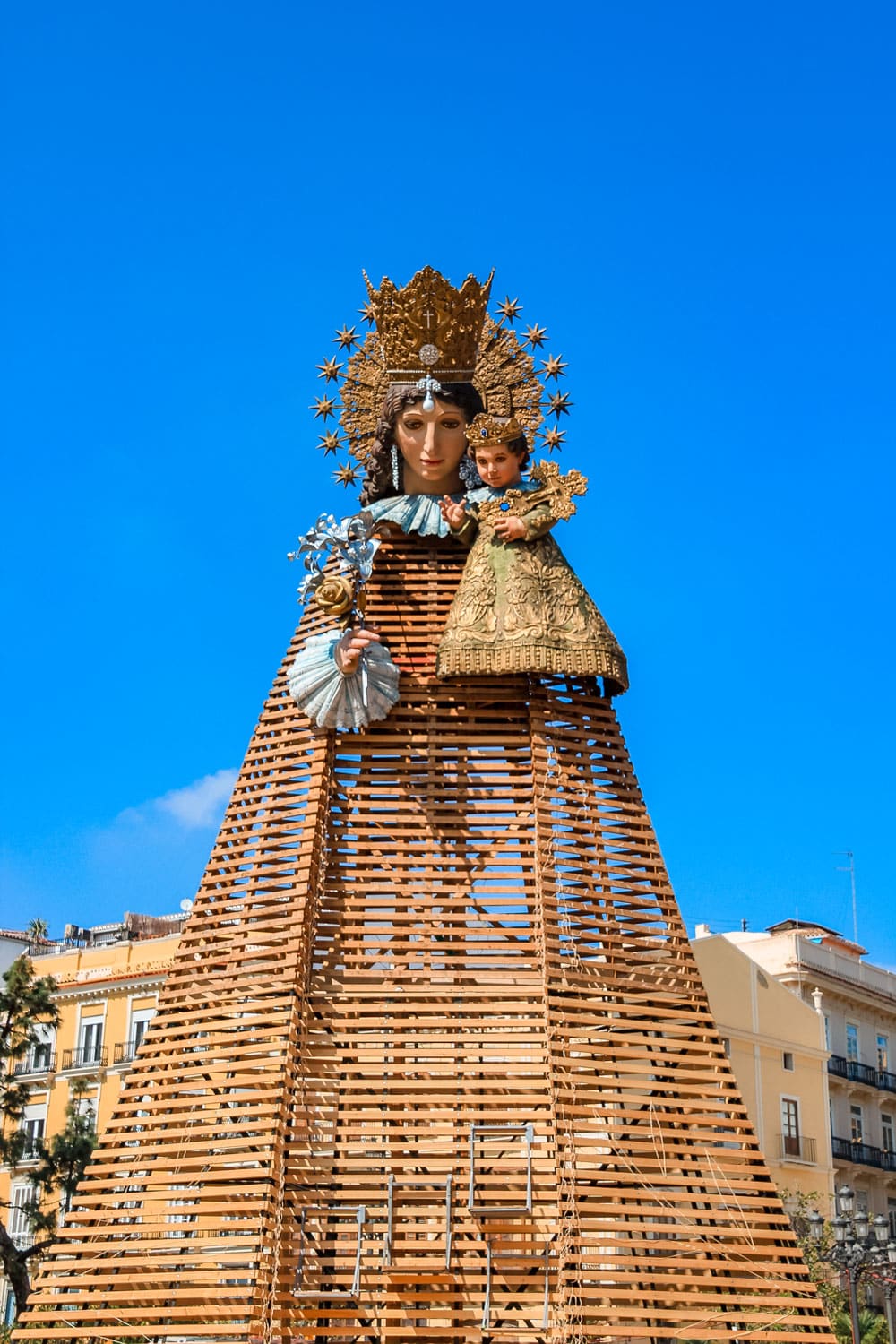
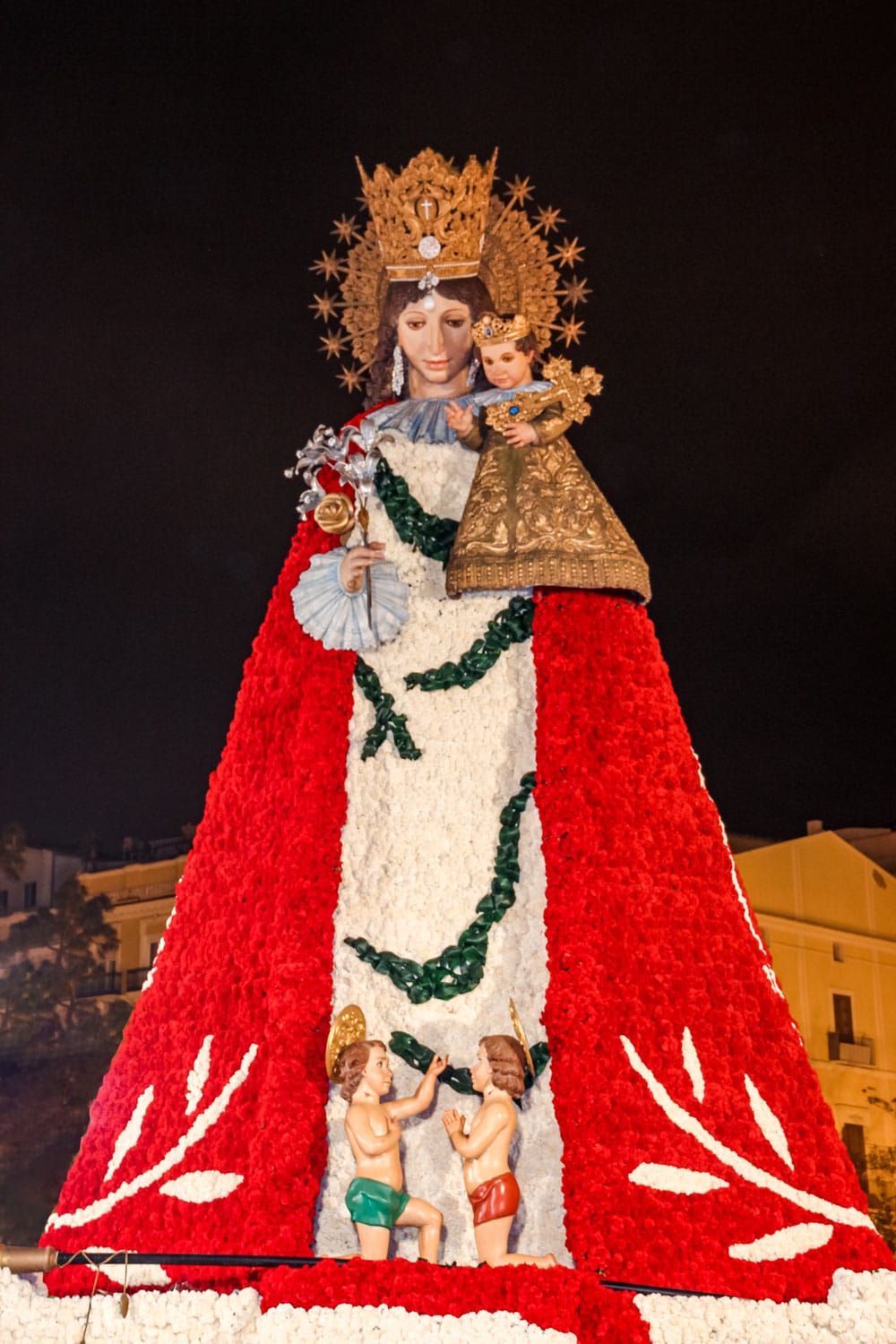
Thousands of people dressed in traditional clothing walk through the city to Plaza de la Virgen and bring flowers to the large wooden structure of the Virgin Mary.
For many, arriving here and offering flowers is an emotional moment. It felt very different from the louder parts of the festival. There was still a crowd, but the mood felt more personal and more moving than in the noisier parts of the festival.
Whole families join the procession, including small children and by the end the structure is covered in flowers. If you want to see one of the more traditional parts of Las Fallas, this is a good one to choose.
What is La Cremà and is it worth seeing?
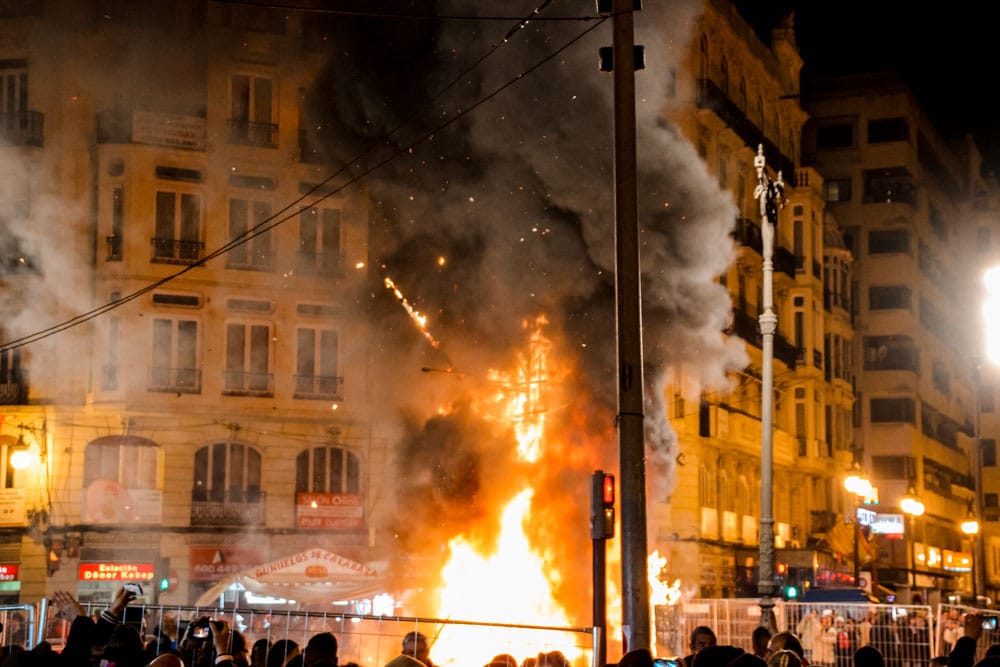
La Cremà is the final part of Las Fallas, when the monuments are burned and the festival comes to an end. It is the most dramatic part of the celebration and the part many people think of first.
There is no denying that it is powerful. These huge monuments, which people have worked on for months, are set on fire and disappear in a matter of hours. Firefighters are present throughout to control the flames and protect the surrounding buildings and for many of the falleros and falleras it is an emotional moment.
At the same time, this was the hardest part of the festival for us. The smoke was much stronger than we expected and made the whole experience feel far more intense than the rest of the festival. That is the main reason we would not recommend it to families with small children.
So is La Cremà worth seeing? That depends on what kind of experience you are looking for. If the burning is the part you most want to witness, then it is the defining event of the festival. But if you are more interested in the atmosphere, the monuments and the traditional side of the festival, we do not think you need to see La Cremà to feel that you have really experienced Las Fallas.
The origin of Las Fallas
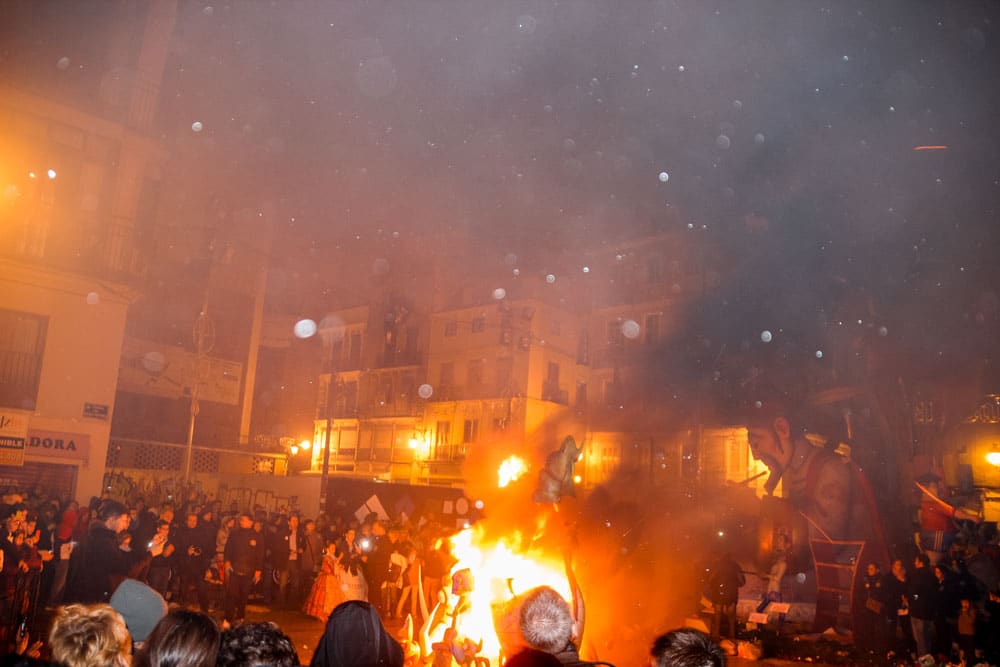
The origin of Las Fallas is linked to an old carpenter’s tradition connected to the arrival of spring and St. Joseph’s Day. Over time, what began much more simply grew into the large celebration Valencia is known for today.
One of the most common explanations is that carpenters used to burn pieces of wood and other unwanted materials at the end of winter. As the tradition developed, those simple burnings gradually evolved into the large monuments that now define Las Fallas.
What are fallas made of?
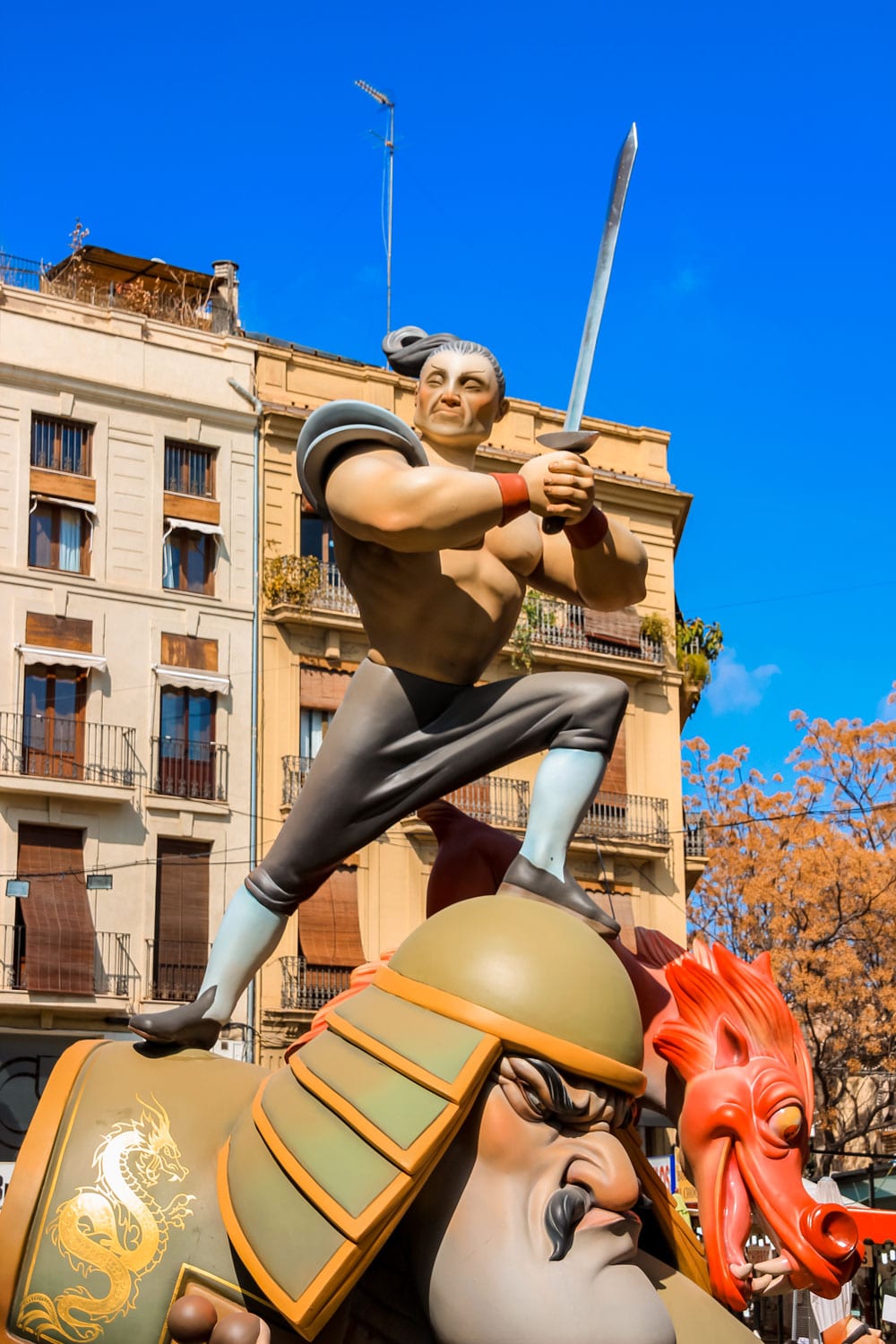
Originally, fallas were made from materials such as wood, paper and papier-mâché. These days, many also include lighter modern materials.
This is where some confusion comes from. In Spanish, polystyrene is sometimes referred to as “white cork”, but that does not mean the monuments are made from natural cork. Materials and techniques have changed over time, which is why you may come across different explanations.
Traditional clothing during Las Fallas
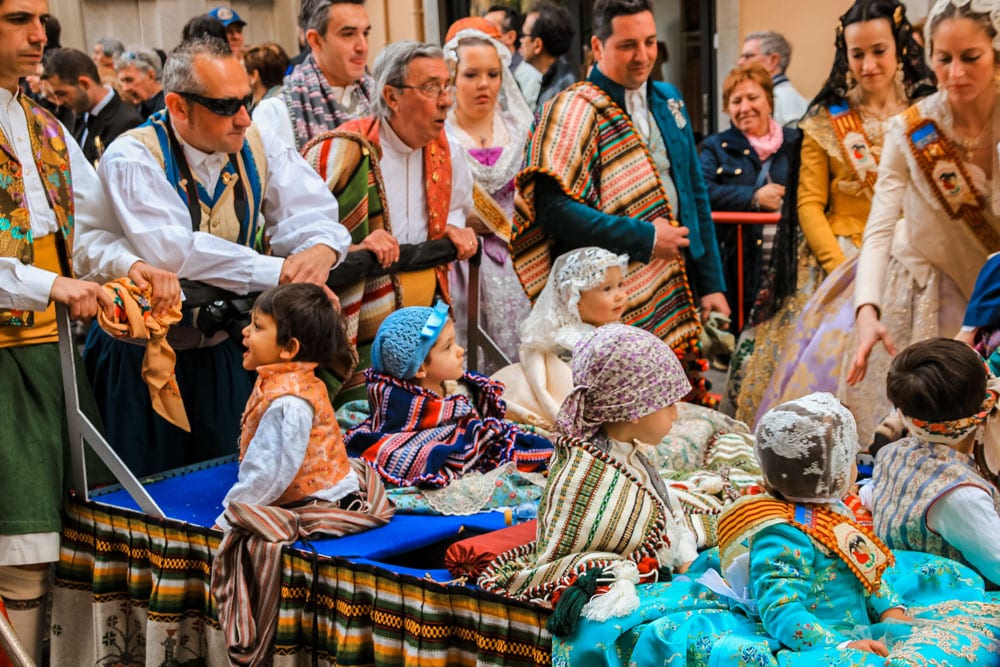
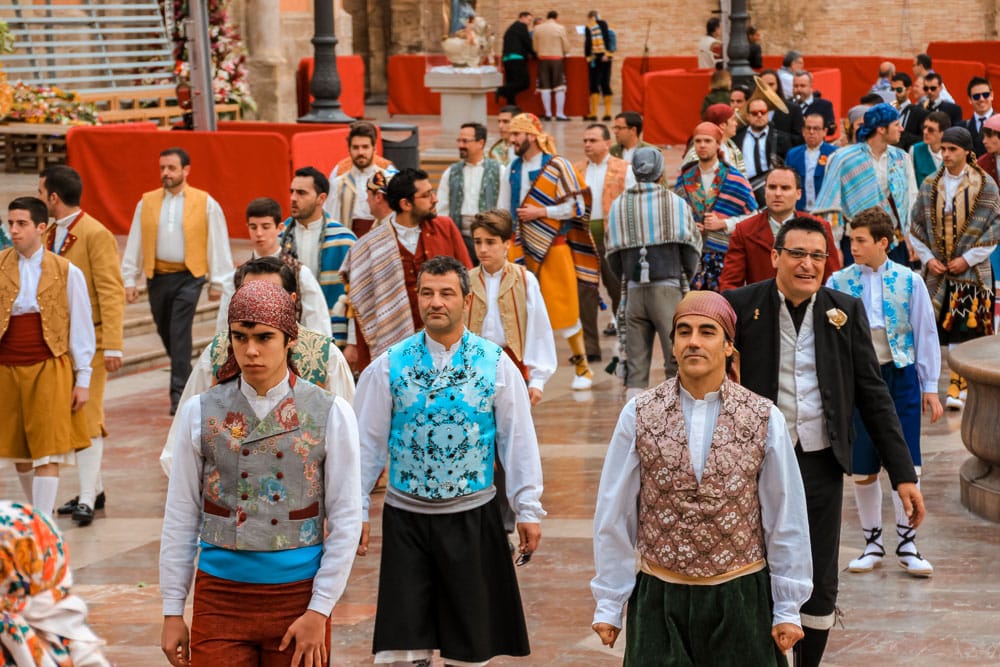
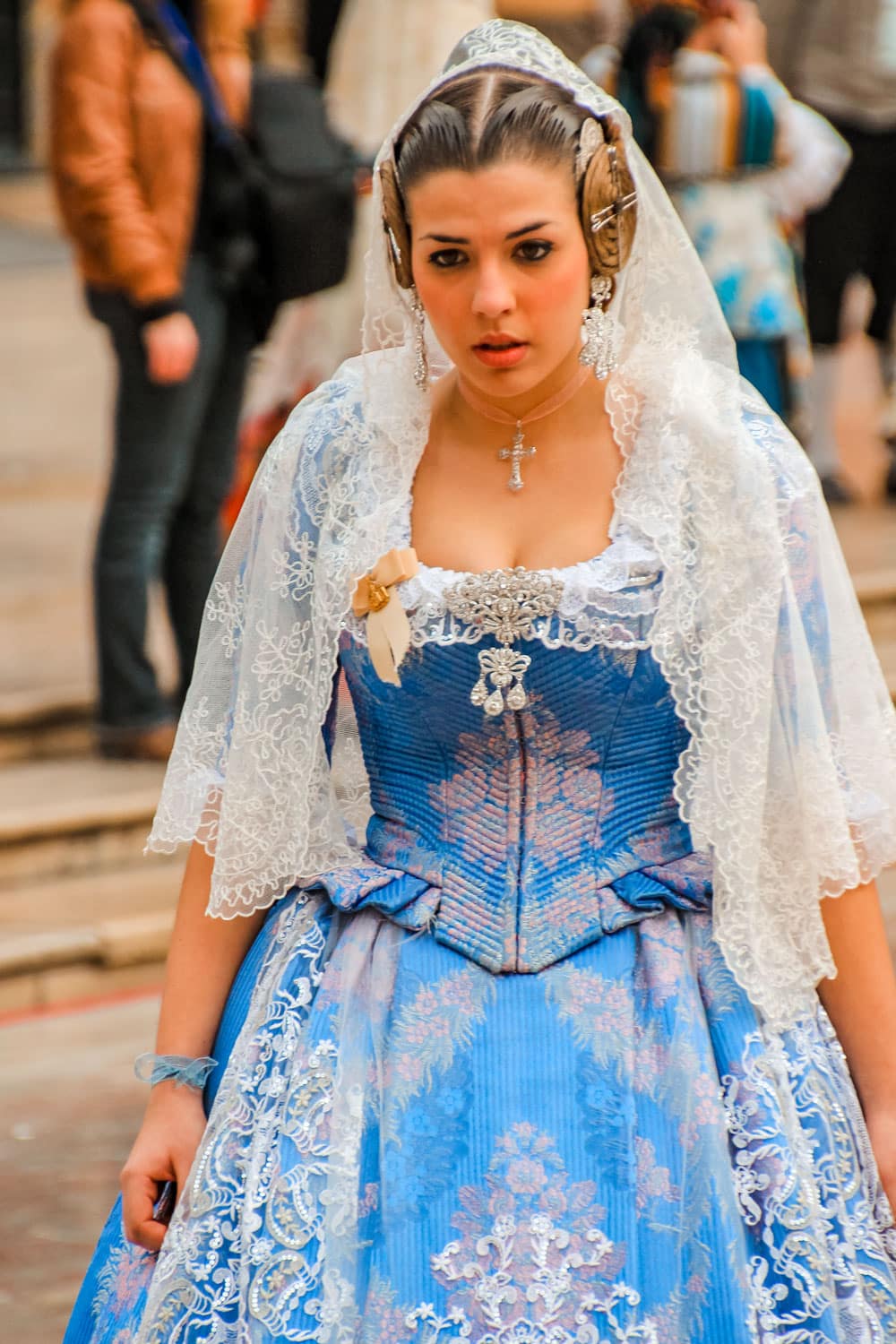
One of the most striking parts of Las Fallas is seeing so many people dressed in traditional Valencian clothing. The fabrics, hairstyles and jewelry stand out even more during the processions and the flower offering.
Women’s outfits are usually the most elaborate, with full skirts, fitted bodices, carefully styled hair and detailed accessories. Valencia is also well known for silk, which is one of the reasons the dresses look so rich.
Men wear traditional clothing as well, usually with a shirt, waistcoat, sash, scarf or hat depending on the style. You do not need to know every detail to appreciate it. It is one of the things that makes the traditional side of Las Fallas so noticeable.
FAQs
Many Las Fallas events can be seen for free in the streets, but some viewing areas or seating may need to be booked in advance. It is always a good idea to check the official program before your trip.
If you only want a feel for the festival, one full day can still be worthwhile. If you want to experience more than one major event without rushing, two or three days will give you a much better sense of it.
Yes, if you choose carefully. I would use that day to walk around and see the monuments, soak up the atmosphere in the city, and, if possible, catch one of the main events.
More Valencia travel ideas
If you are staying in Valencia a little longer or using the city as a base to explore more of the region, these guides might help you plan the rest of your trip:
- 24 Hours in Valencia for a quick city itinerary
- Best Day Trips from Valencia if you want to explore beyond the city
- Monastery of Santa Maria de Valldigna for a quieter historical stop
- Things to Do in Costa Blanca if you are traveling through Alicante and continuing north