
Mulhouse was a two-night stop on our drive from Spain to Estonia. Our son was 20 months old and loved anything with wheels, so we spent one morning at the car museum.
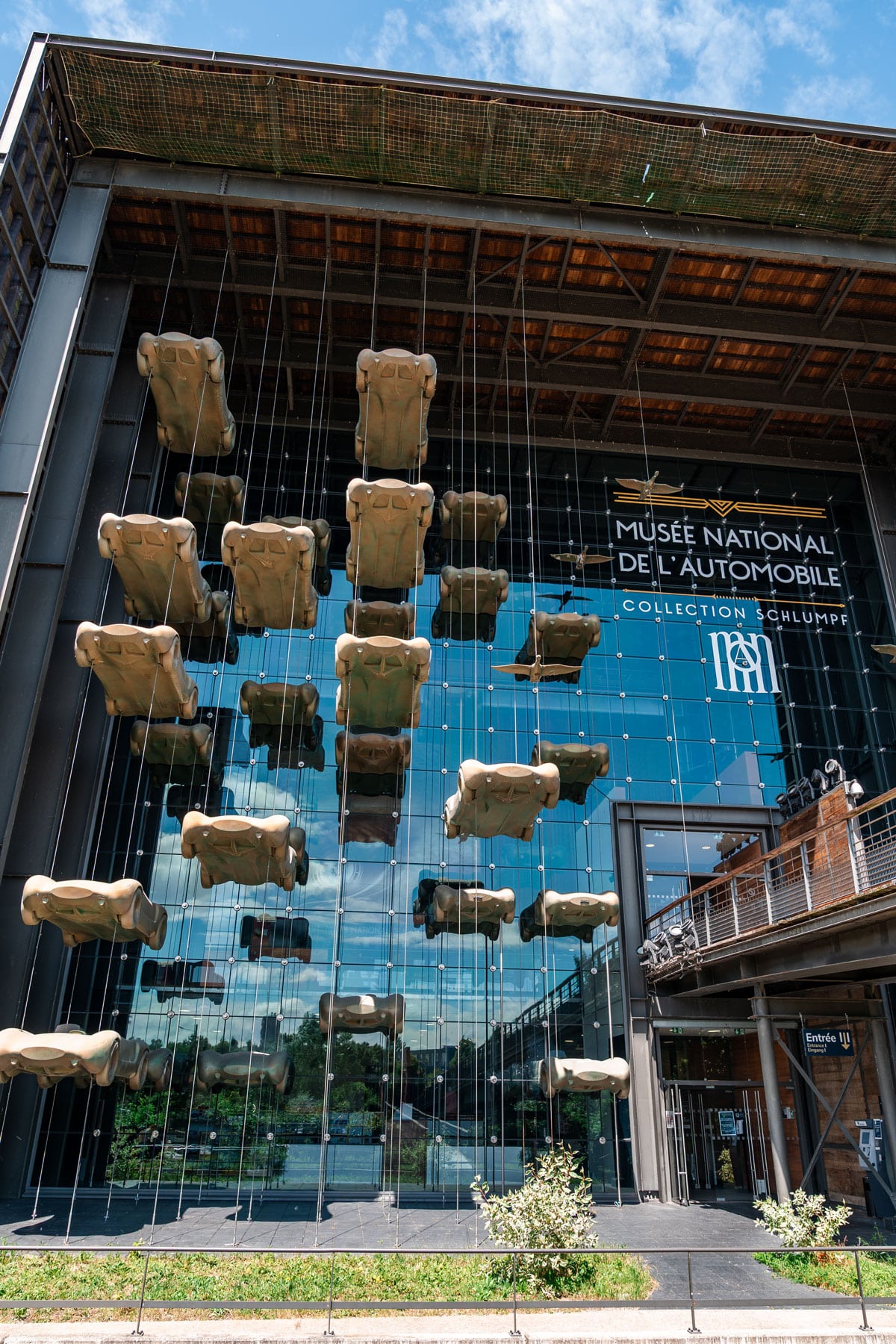
The place goes by several names. Its official name is Musée National de l’Automobile – Collection Schlumpf, but you will also see Cité de l’Automobile and Mulhouse Car Museum. They all refer to the same place.
It holds the world’s largest displayed automobile collection, with more than 450 cars, including the largest Bugatti collection anywhere.
Tickets, parking and how long we stayed
Visited June 2024. Prices, parking and access last verified July 2026.
We arrived at about 10:20 a.m., parked right in front and were through the entrance around 10:30 a.m. We left at 12:10 p.m., so we spent about 1 hour 40 minutes inside.
The museum suggests around 2 hours for a visit. We were a little under that because we kept moving with our son and skipped most of the information panels.
It was fairly quiet when we arrived and noticeably busier when we left.
The visitor entrance is at: 17 rue de la Mertzau, 68100 Mulhouse.
For GPS, enter the full street address rather than searching only for the museum name.
Parking is directly in front of the entrance. The current charge is 4 euros for the day. You pay at the machine when you leave.
Current admission prices are:
- Adults: €19
- Reduced admission: €15
- Children ages 4 to 17: €13
- Children under 4: free
- Family rate for 2 adults and 2 children ages 4 to 17: €56
The reduced rate is available to students, job seekers, Education Pass holders, disability card holders and one accompanying person. You may be asked to show proof.
Opening times change through the year, so check the official museum website before you go. The ticket office closes one hour before the museum closes.
The museum says the main exhibition hall is neither heated nor air-conditioned. In June, the temperature was fine for us. The restaurant and cafeteria are heated and air-conditioned.
Inside the museum
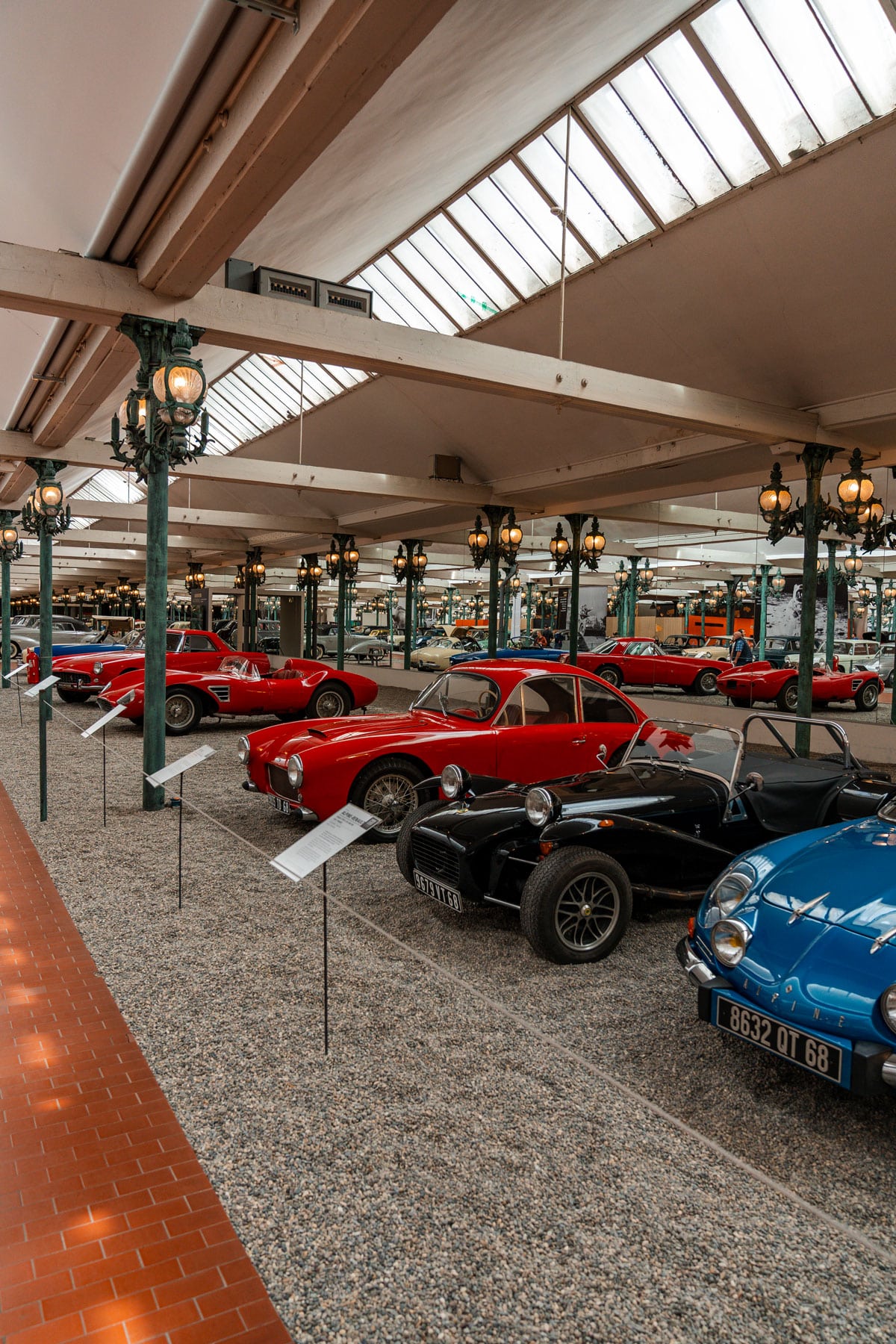
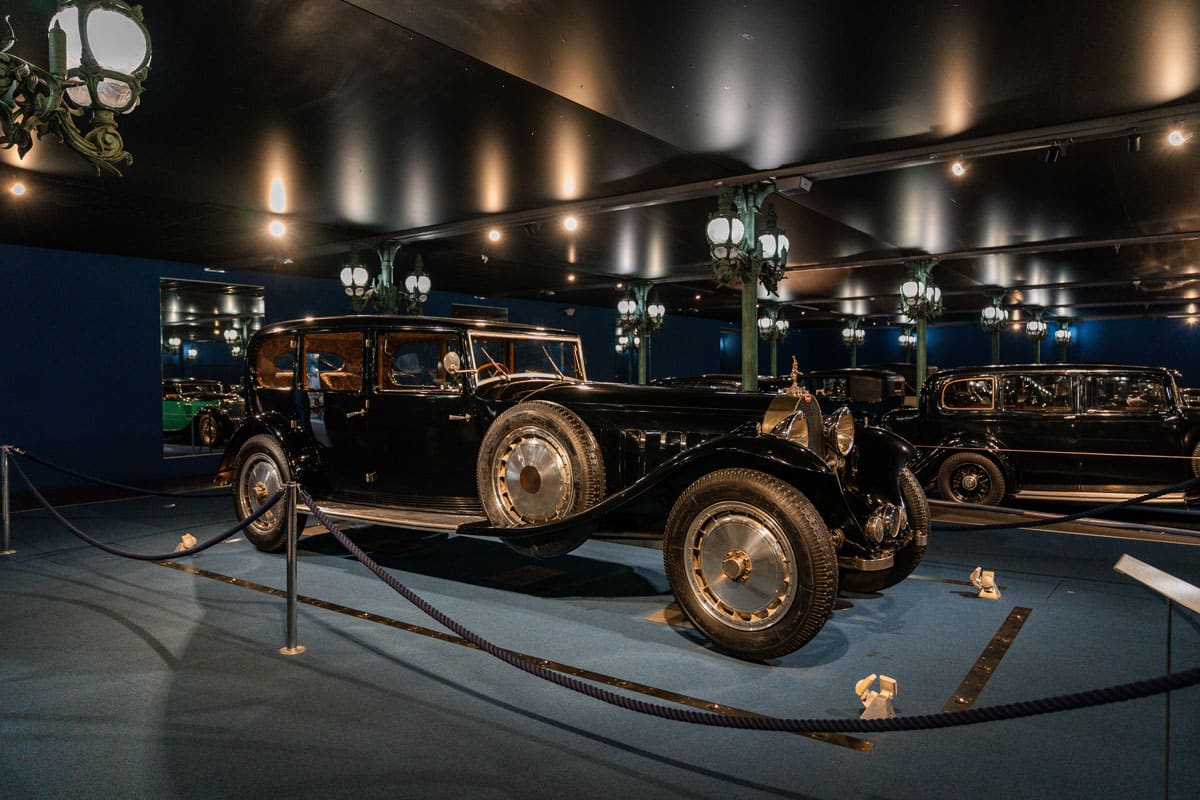
We entered directly into the main hall, with long rows of cars and ornate green lamp posts between them.
The lamp posts are copies of those on Pont Alexandre III in Paris, and there are hundreds of them.
The hall was once part of a textile mill owned by Hans and Fritz Schlumpf, which explains both the scale of the room and where the collection gets its name. Fritz began buying old cars in large numbers during the 1960s and stored them here. After the textile business collapsed, laid-off workers discovered the secret collection in 1977. That collection is still at the heart of the museum.
As we moved through the building, the setting changed. Some cars were arranged in the main hall, while others sat in smaller galleries with spotlights and colored walls.
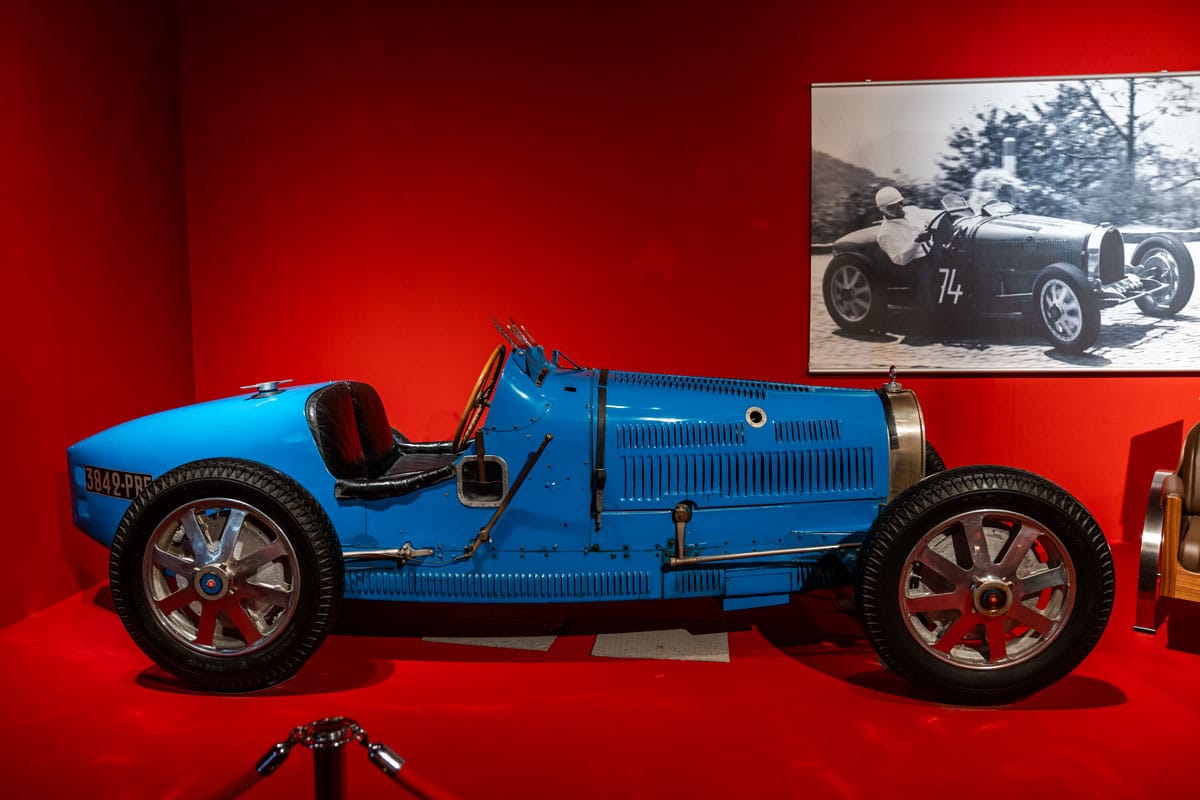
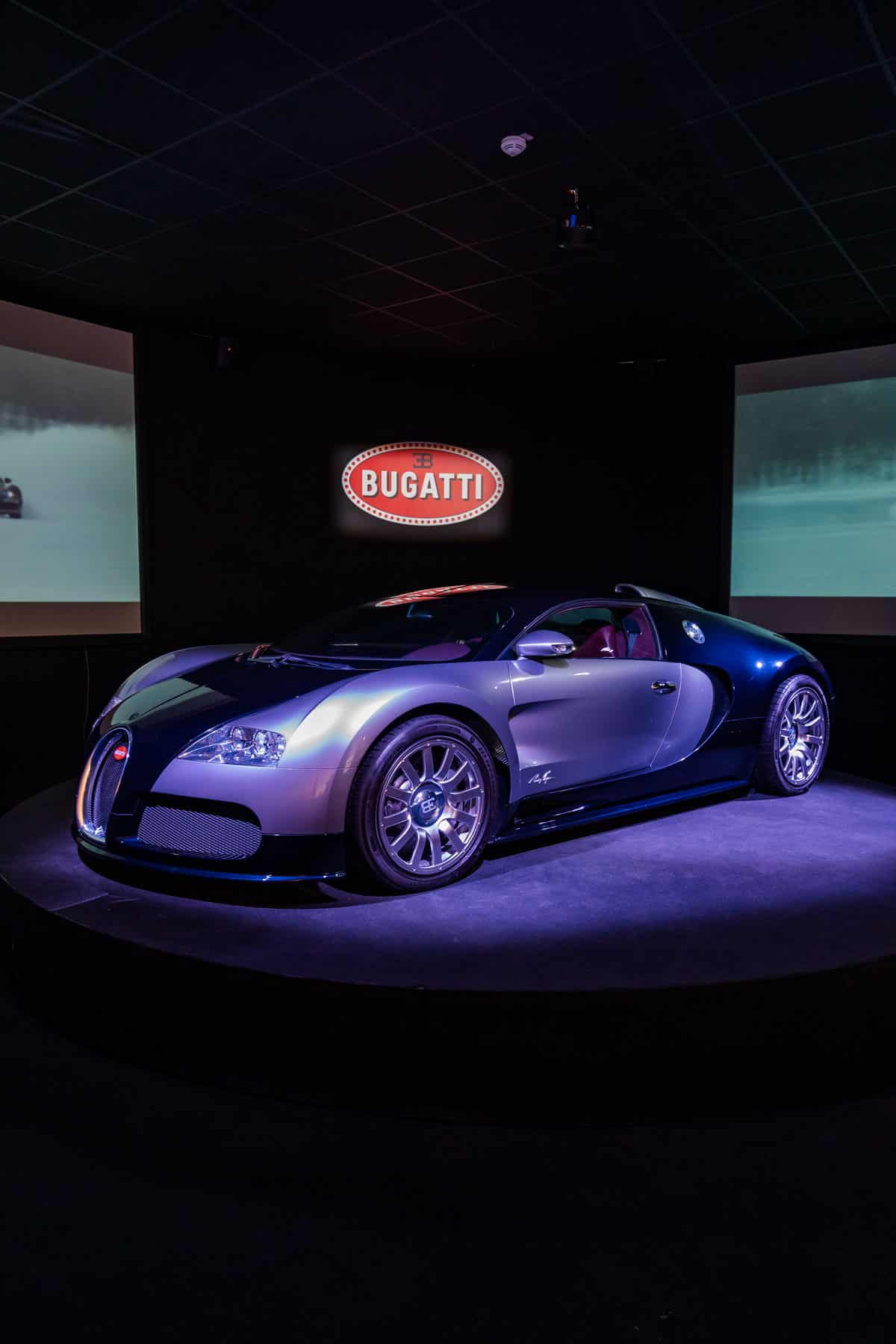
There were Bugattis throughout the museum. The black Royale was the one I remembered most, mainly because of its size.
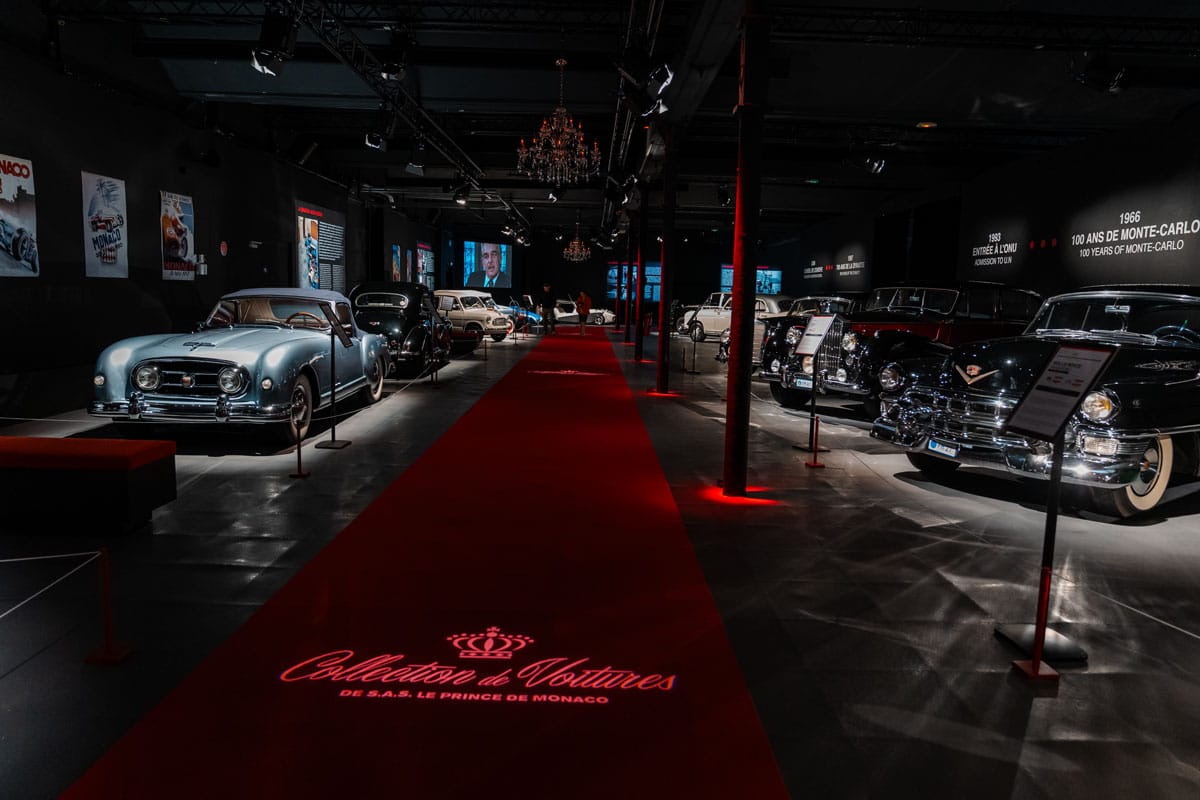
During our visit, a temporary exhibition showed cars from the Prince of Monaco’s collection. They were lined up along a red carpet with Monte-Carlo signs at the end.
Temporary exhibitions change, so you will see something different now.
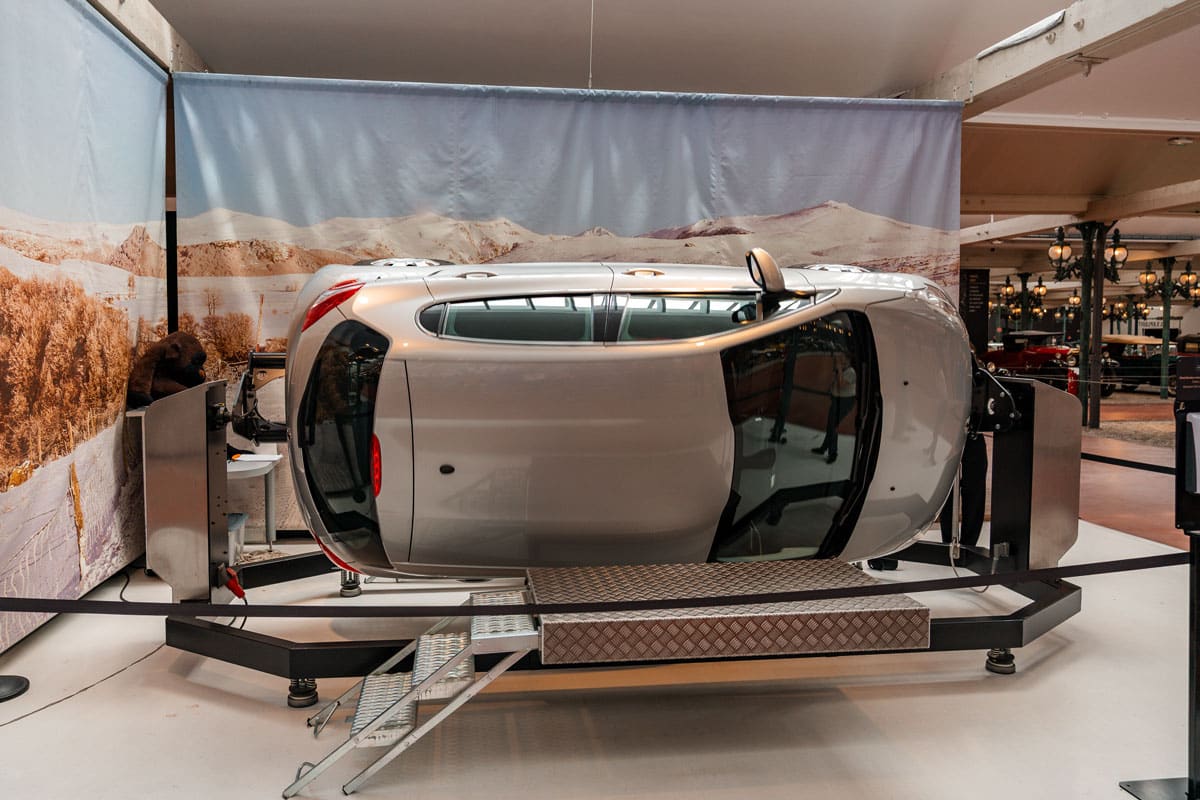
We stopped at the rollover simulator while another visitor was trying it. Once they were strapped in, the car turned onto its side and then upside down.
We only watched. The museum lists the activity for people between 1.40 and 1.85 meters tall.
With a stroller and a young child
We used the stroller throughout the visit. The collection is on one level, the halls are wide and we had no trouble moving around.
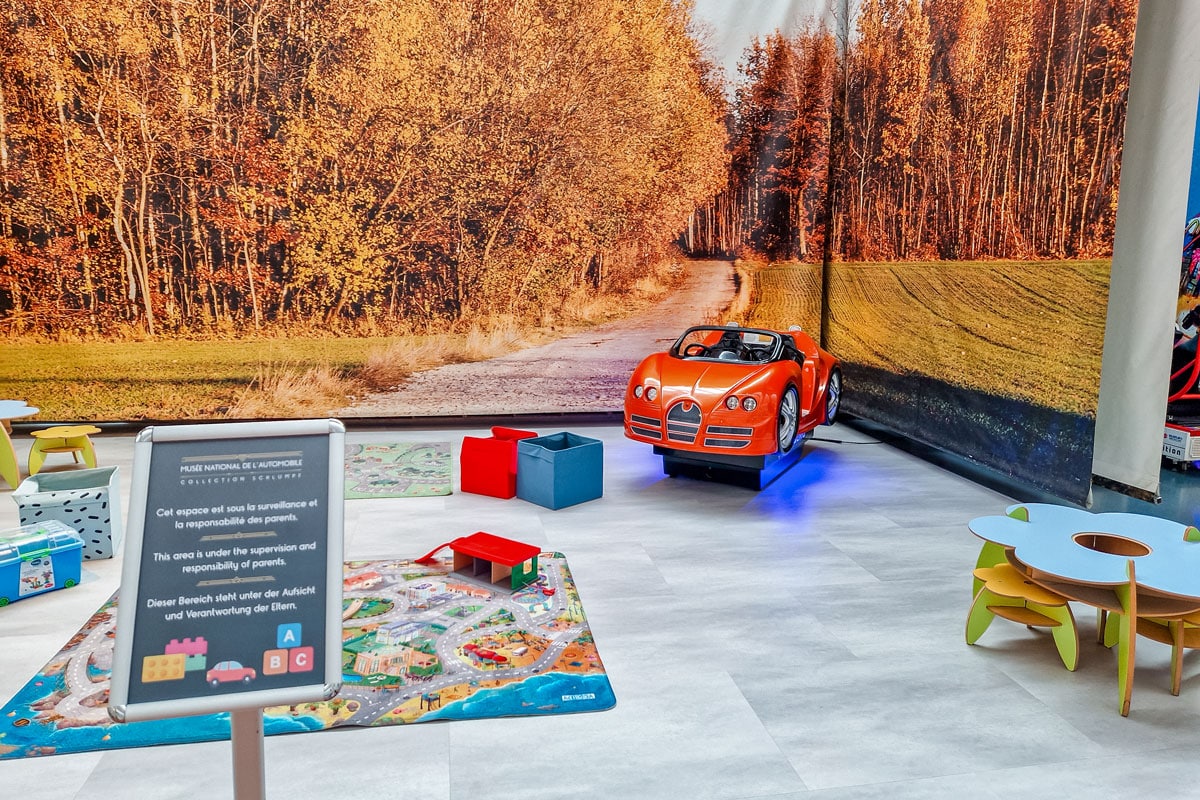
Our son was too young for the go-kart track, which is for children ages 4 to 8. He did spend time in the play area, where there was an orange ride-on car, road-print mats, building blocks and small tables.
A sign beside the play area says children remain under their parents’ supervision and responsibility.
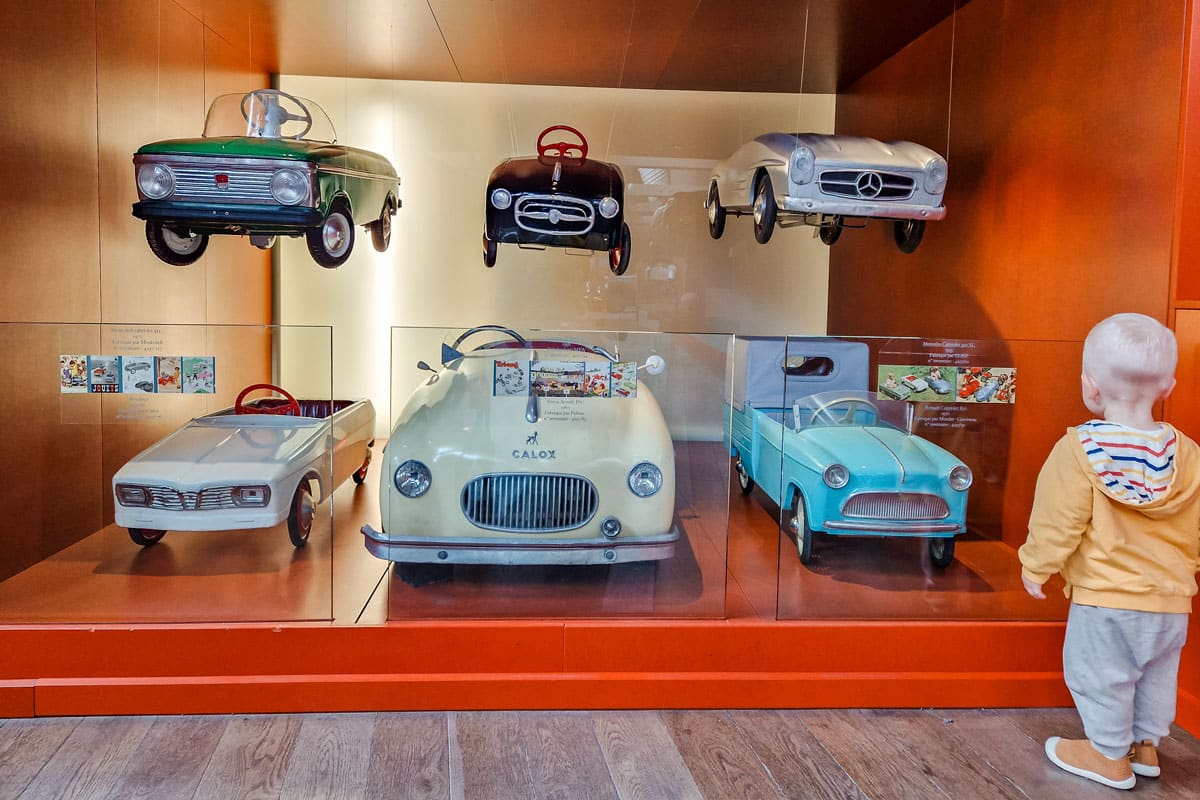
He was also interested in the old pedal cars behind glass. They were closer to his size than the cars in the main hall, and he stood in front of the case looking at them for a while.
The shop at the end
Before we left, we went into the museum shop and bought our son a toy car.
He wanted it out of the box immediately, and the staff opened the packaging at the counter so he could carry it out and play with it straight away.
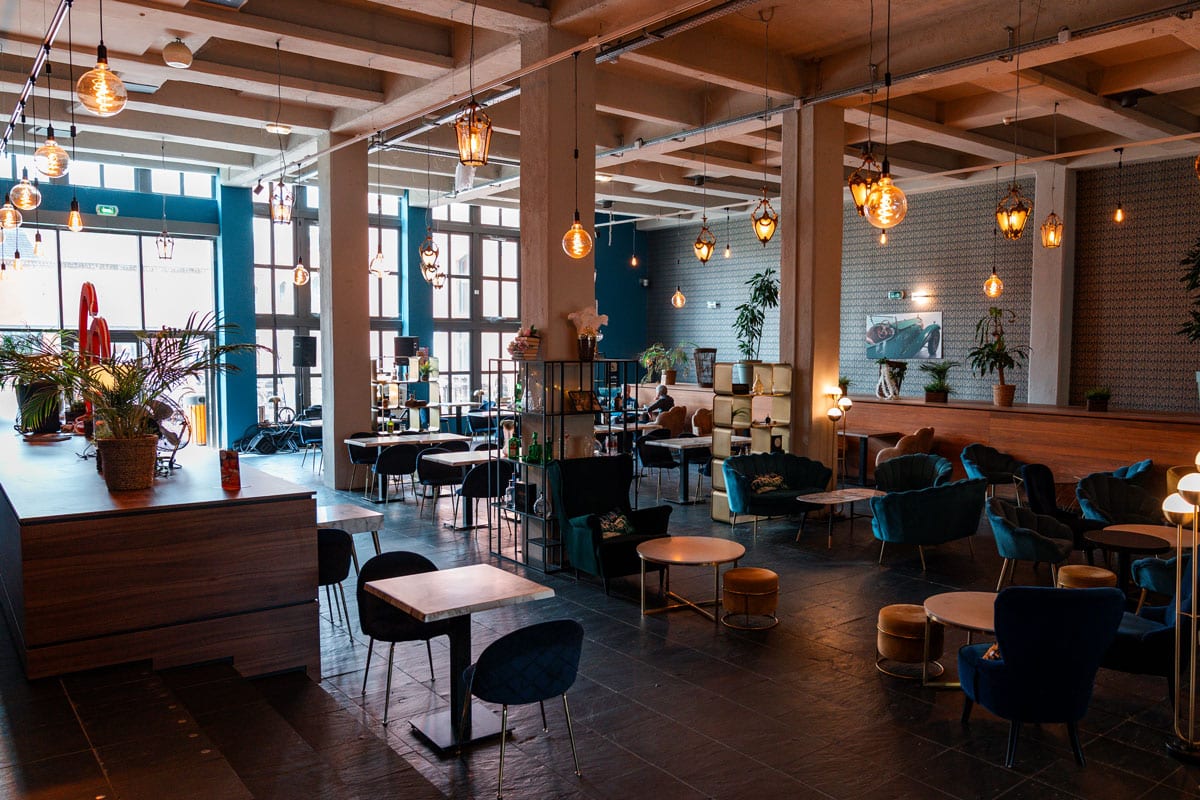
There is also a restaurant, a cafeteria and a 1920s-style bar called Le Gatsby. We had a look at the bar but did not stop.
Our third car museum
This was our third, after one in Ireland and the car museum in Salamanca, Spain.
Of the three, Mulhouse was our favorite. The collection was much larger, the old mill was impressive and there was plenty for all of us to see.
On this trip, Mulhouse came after Orange, down in Provence. The large stone steps at the Roman Theatre had been the hardest part of that morning with the stroller. At the car museum, moving around was much easier.
By the time we left, we had all enjoyed the morning, and our son carried his new toy car back to the parking lot.