
The Roman Theatre of Orange was the main reason we planned time in town. The Triumphal Arch ended up being our personal favorite, but the theatre was the one I most wanted to see inside.
We visited in mid-June, a little after 10 in the morning, with our toddler. It was warm and sunny but not too hot yet, and the theatre was quiet. The stage was being set up for an event, with crew and a forklift on the floor. It did not feel like an empty ruin. It felt like a Roman site that is still part of the town.
This post is about the theatre itself. What makes the stage wall special, what to expect inside, how much time to allow, whether the museum across the street is worth adding and what was practical, or not, with a toddler.
For the wider town, see our guide to what to see in Orange, France. For the order of the day on foot, see our half-day Orange itinerary.
Visited June 2024. Prices, hours and practical details last checked in June 2026.
If you only have a few minutes to plan
The Roman Theatre is the main sight in Orange, and I would not skip it if you are already in town.
Allow about 60 to 90 minutes for the theatre, or closer to 2 hours if you add the museum across the street.
The standard ticket covers the theatre, an audioguide and the Museum of Art and History. At my last check the adult ticket was €11.50, with reduced and family rates and free entry for under-7s.
In June, July and August the theatre is normally open 9 a.m. to 7 p.m., though summer rehearsals and performances can shift hours or limit access.
We parked by the Triumphal Arch and walked in. The underground Cours Pourtoules lot is closest if you only want the theatre.
It is not a stroller-friendly visit. More on that below.
Is the Roman Theatre of Orange worth visiting?
Yes, especially if you are already in Orange, Avignon or this part of Provence.
I would not tell you to drive across France only for the theatre. But if you are nearby, it is one of those places that makes much more sense once you are standing inside it.
We have seen quite a few Roman sites, and this one felt different because of the stage wall. In most Roman theatres the seating survives but the stage area is largely gone. In Orange the wall behind the stage is still standing, so you are not piecing the place together from a few stones. The shape, the scale and the wall are all still there.
What makes the stage wall special
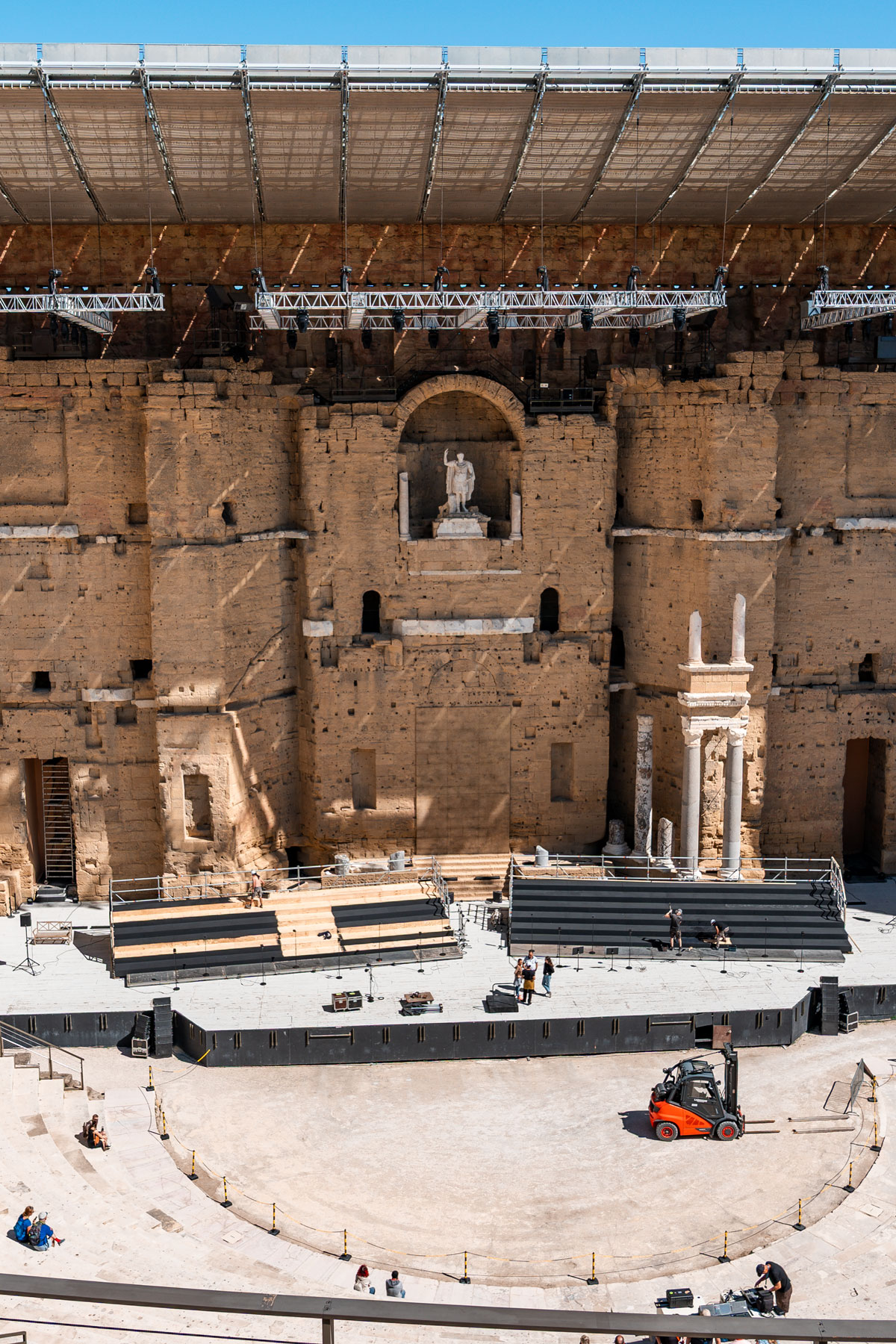
The stage wall is the reason the Roman Theatre of Orange stands out.
It is about 103 meters long and 37 meters high, and it is one of the best-preserved Roman theatre stage walls in Europe. From the seating it almost looks unreal, because it gives the whole site a sense of completeness you rarely get at a Roman ruin.
The Roman term for it is the frons scaenae. You do not need to remember that to enjoy the visit, but it helps explain why this theatre is not just another pile of old stone.
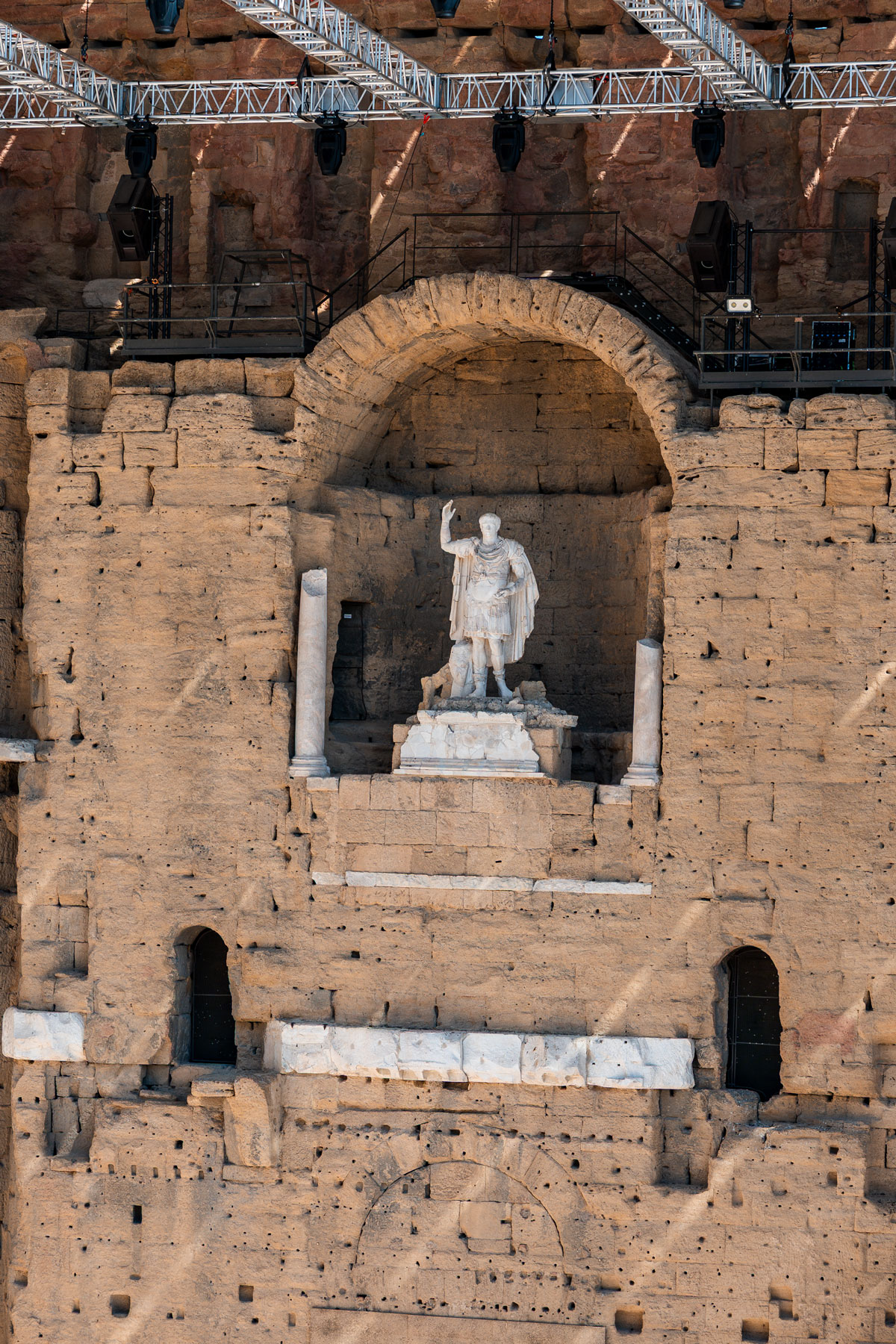
Set high in the center is a statue of Augustus. From the seats it looks small. It is actually more than 3 meters tall, which tells you something about the scale of the wall behind it.
Louis XIV is often quoted as calling it the most beautiful wall in his kingdom. It sounds a bit dramatic until you are standing under it and see how much is still intact.
What it was like visiting in mid-June
We went just after 10 in the morning, and that timing worked well. It was already warm but not uncomfortable, and the theatre was quiet enough to move around and take photos without feeling rushed. In summer I would aim for the morning rather than the middle of the day.
The thing that stood out was the stage setup. There were workers, equipment and a forklift on the theatre floor, getting the stage ready for an event. Some people might want a completely clean view, but I liked seeing the place being used. It is a reminder that this is not only a preserved monument. It still hosts performances.
If you want the cleanest photos or the quietest visit, that is useful to know before you go. In summer especially, rehearsals, setup and take-down can change what you see on any given day.
The steps, and visiting with a toddler
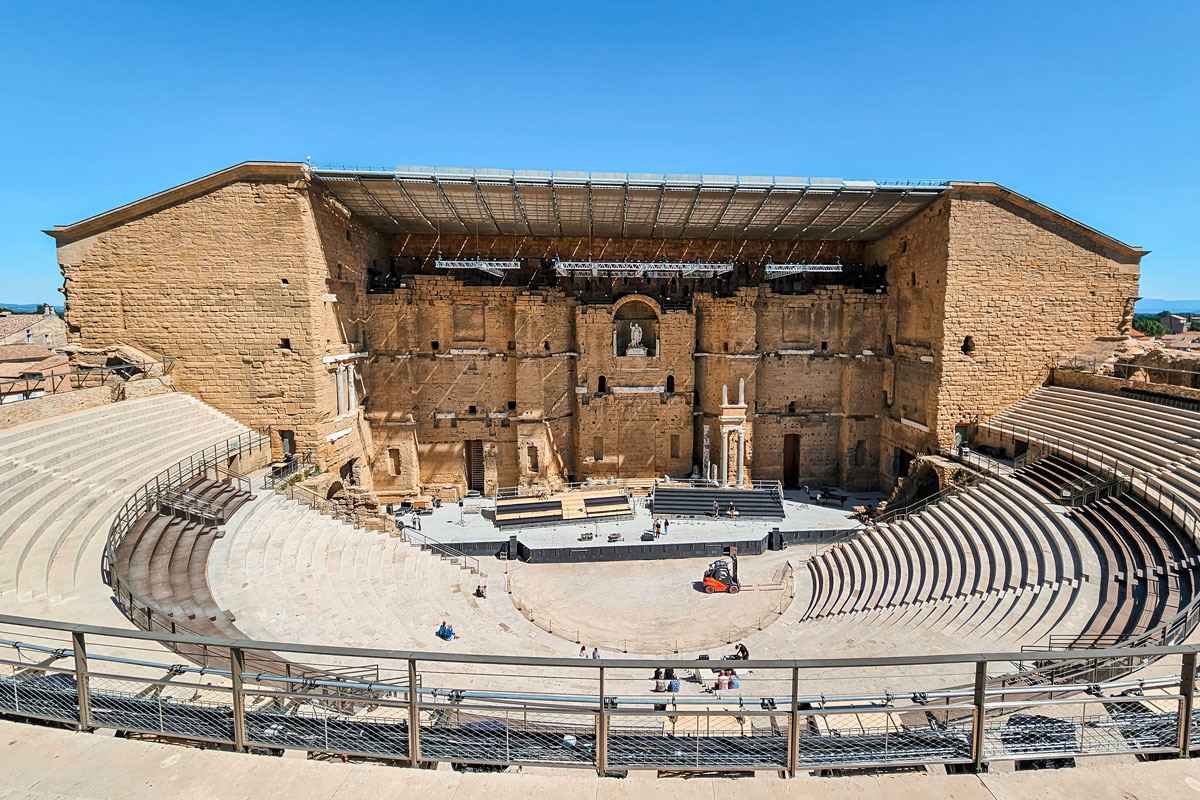
The steps are huge. That was the most practical thing I noticed inside.
If you stay near the lower area, the visit is fairly relaxed. But the best views over the stage and the wall are higher up, and getting there means climbing a lot of tall stone steps. As a photographer I kept moving around for wide-angle shots, and it honestly felt like a leg day at the gym.
We did not find the theatre stroller-friendly. The lower ground worked for us, but the main seating is all big stone steps, and I did not notice a lift, though we may have missed one. If step-free access matters to you, I would check with the theatre directly before going.
With a toddler, I would not plan this as a stroller visit. What worked for us was taking it slowly, with one of us moving around for photos while the other stayed lower down with him. The museum across the street was easier on that front and gave us a good break afterward.
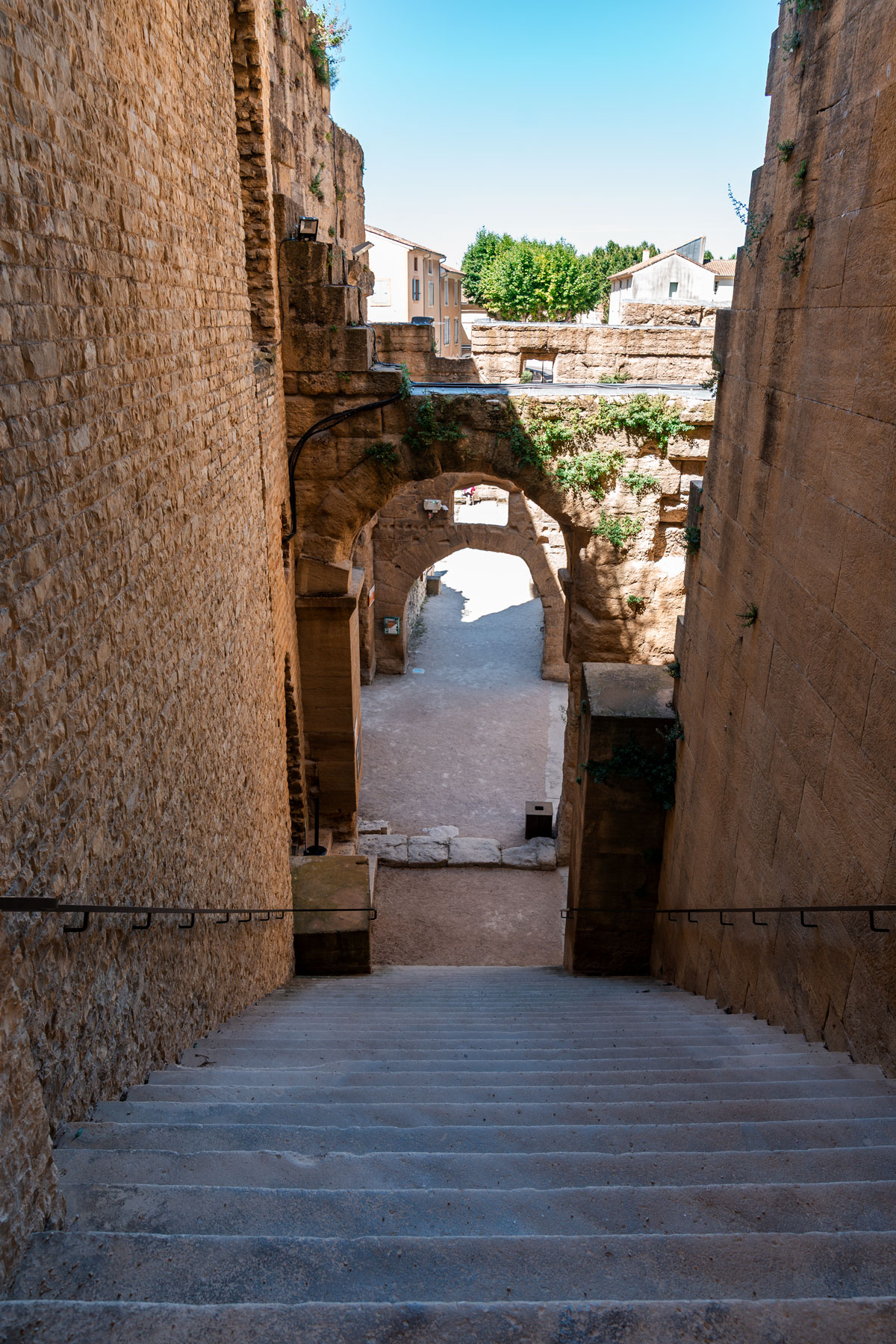
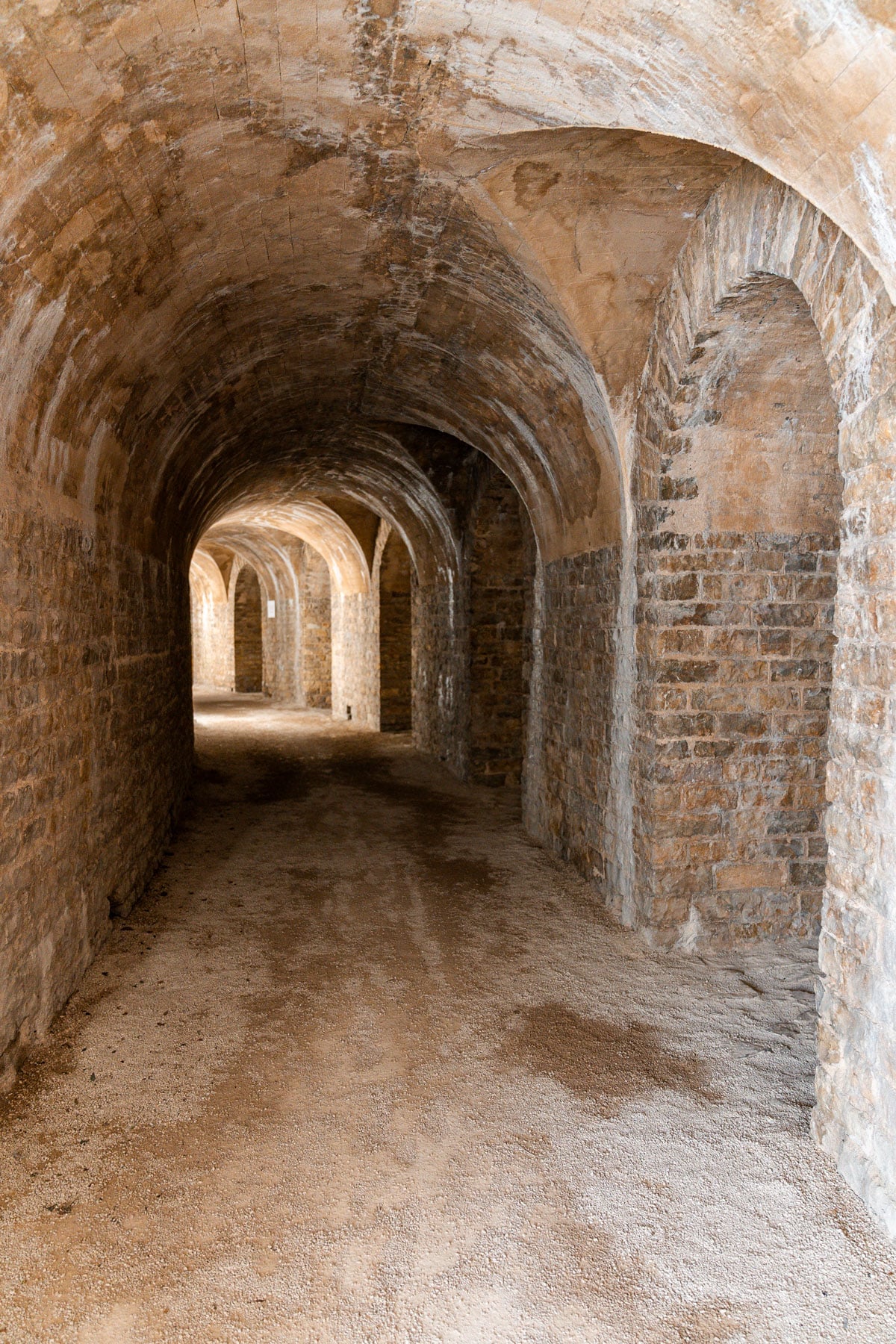
The cave galleries and L’Odyssée Sonore
Do not only look at the main seating and leave.
Around and below the theatre are cave-like galleries and stone corridors that feel completely different from the open theatre. They are cooler, darker and quieter, and they were one of the parts I liked most.
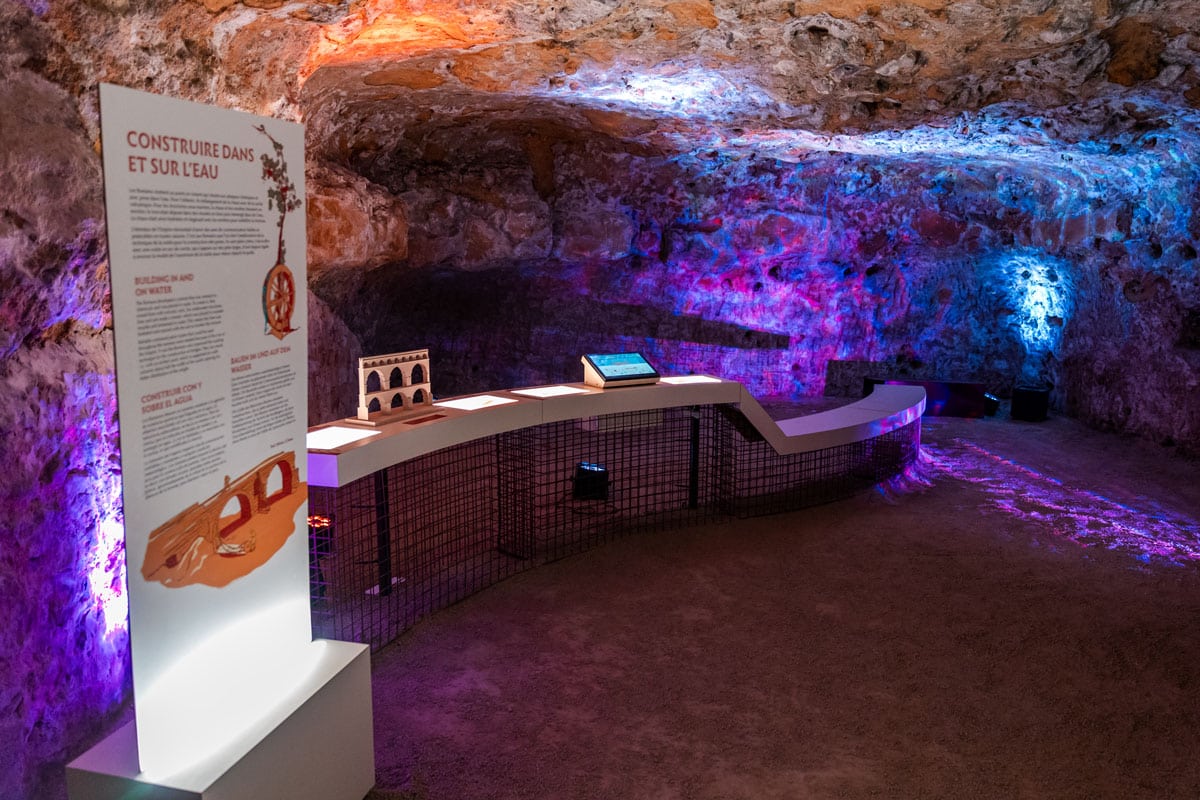
There is also an immersive sound and light experience called L’Odyssée Sonore, down in those lower spaces. It is a separate ticket from the standard visit, so check the current price if you want to add it.
One family note: it is not really set up for under-7s. The official site says children under 7 can go in but cannot use the headphones and smartphone, so with a toddler it was more of a short look than the full thing.
The museum across the street
The standard ticket includes the Museum of Art and History across the road, and I would add it if you have the time.
Not because it is a big museum. It is not. But it adds context to the theatre and it is close enough that it does not complicate the day.
We liked it more than expected. The staff were friendly and helpful, and the pieces are displayed close up, so you can actually look at the carved fragments, masks and mosaics rather than squinting at them from behind a rope. There are some painted rooms upstairs we did not see coming either.
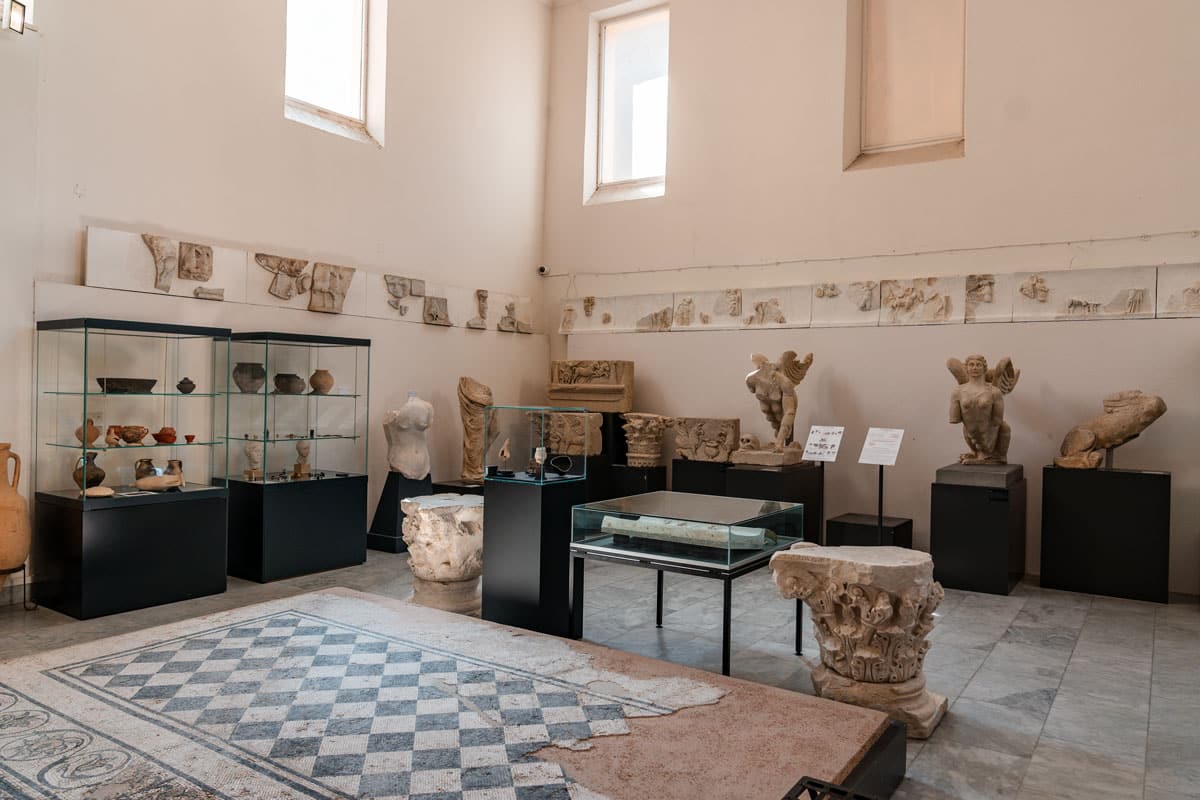
If you are short on time you can skip it and still feel like you saw the main thing. With about 2 hours total, I think the theatre and museum together make the better visit.
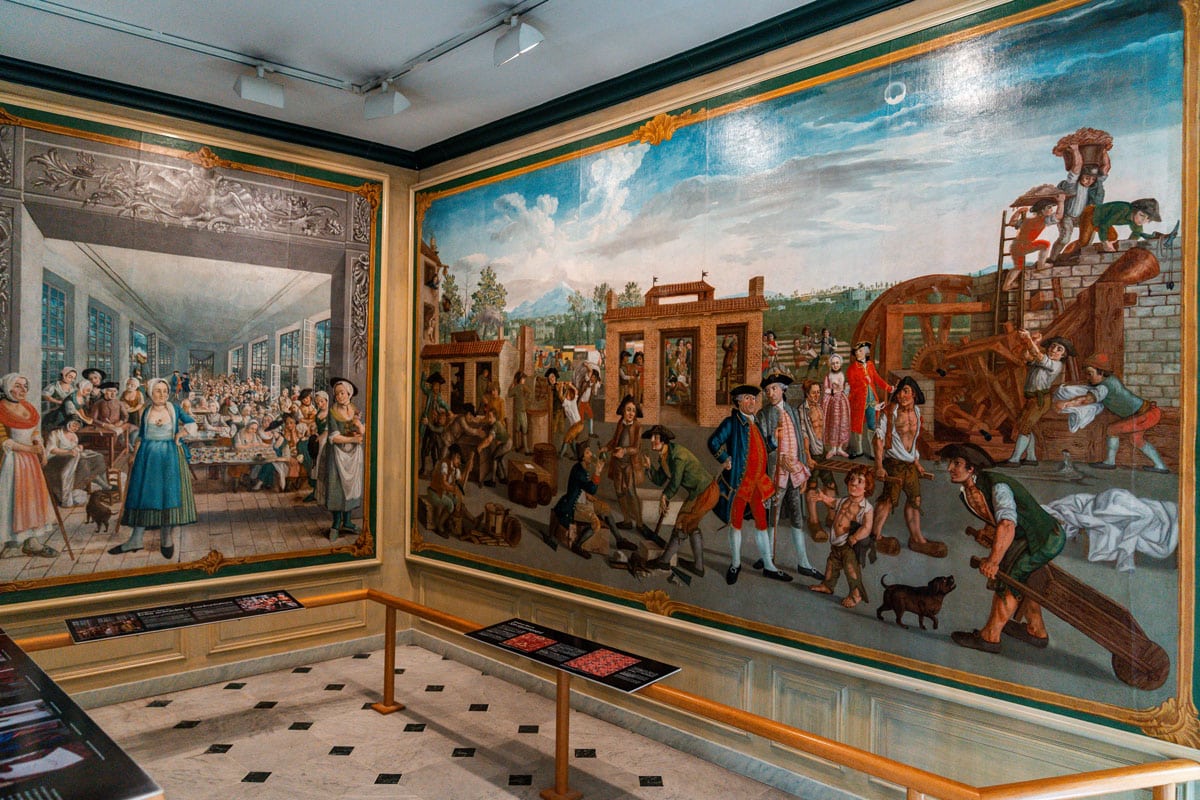
One small thing I noticed: the signs around the site are in four languages, French, English, Spanish and German, so you can follow along even without the audioguide.
Tickets, hours and parking
On the official site, you will usually see the theatre listed as the Théâtre Antique d’Orange.
At my last check the standard adult ticket, which covers the theatre, audioguide and museum, was €11.50. There are reduced rates, a family rate and free entry for children under 7. On performance days in summer there can be a small surcharge.
The theatre is open daily, with longer hours in summer: 9 a.m. to 7 p.m. in June, July and August, and shorter hours the rest of the year. The museum keeps its own hours, usually 10 a.m. to 6 p.m. from April to September.
I would still check the official theatre site for the day you are going. In summer this matters most, because performances and setup days can change the hours or close parts of the site.
If you would rather start right at the theatre, the official site says the city offers 2 hours free in the underground lot on Cours Pourtoules.
Combining the theatre with the rest of Orange
This post is only about the theatre, but it makes the most sense as part of a short visit to Orange.
The Triumphal Arch is the other Roman landmark in town and well worth pairing with the theatre. It was actually our personal favorite sight in Orange because it was free, easy to visit and much more toddler-friendly.
If you have only a couple of hours, do the theatre and museum first. With half a day, add the arch and a short walk through the old town. For the walking order, use our half-day Orange itinerary.
Pont du Gard also fits well with Orange if you are planning a bigger Roman-sites trip in this part of southern France. We visited it as a short stop, and I wrote more about seeing Pont du Gard in under two hours.
Would we go again?
Yes, and in the morning again. The stage wall is the reason to come, but what stuck with me was seeing it still in use, with the stage being prepared for a show.
If I planned it again I would do the same order: theatre first while it is cool and quiet, then the museum to slow down afterward. The one thing I would change is going in with lower expectations about moving fast. With a toddler and those steps, this is a slow visit, and it goes better if you plan for that.
FAQ
The stage wall. It is about 103 meters long and 37 meters high, and one of the best-preserved Roman theatre stage walls in Europe.
Yes, together with the Triumphal Arch of Orange and the surrounding area.
About 60 to 90 minutes for the theatre, or closer to 2 hours if you also visit the museum across the street.
Yes. The standard ticket covers the theatre with audioguide and the Museum of Art and History.
Not really. The main seating is large stone steps, and we did not spot a lift. Check with the theatre if step-free access matters to you.
Not for under-7s. The official site says they can go in but cannot use the headphones and smartphone.
The morning. We went a little after 10 in mid-June and it was warm but still quiet. Also check whether performances or stage setup are happening on your date.
We parked by the Triumphal Arch and walked in. If you only want the theatre, the underground Cours Pourtoules lot is closest, with 2 hours free according to the official site.